
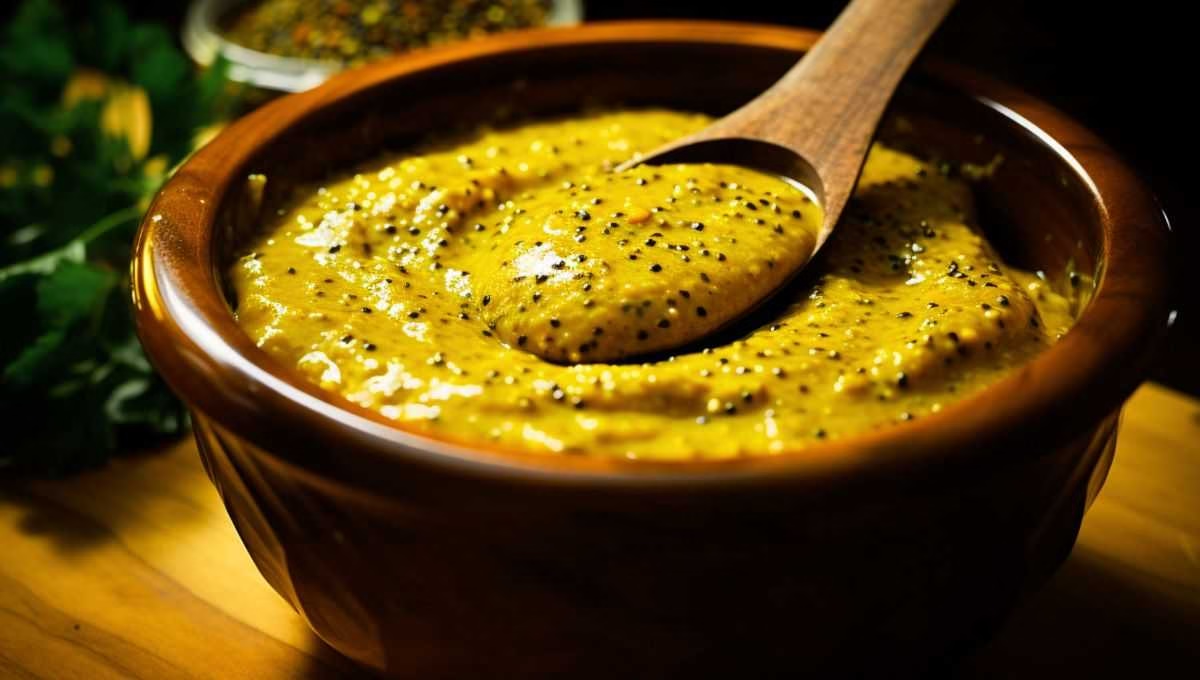
Bengalis are a food-loving nation. From rice, fish, lentils, fried foods to cutlets or kabirazi — each dish has its own taste and story. But in this world of taste, there is one such companion, without whose absence many Bengali dishes seem incomplete — that is Kasundi. It is rightly called Bengal’s king of condiments.
Origin and Tradition of Kasundi
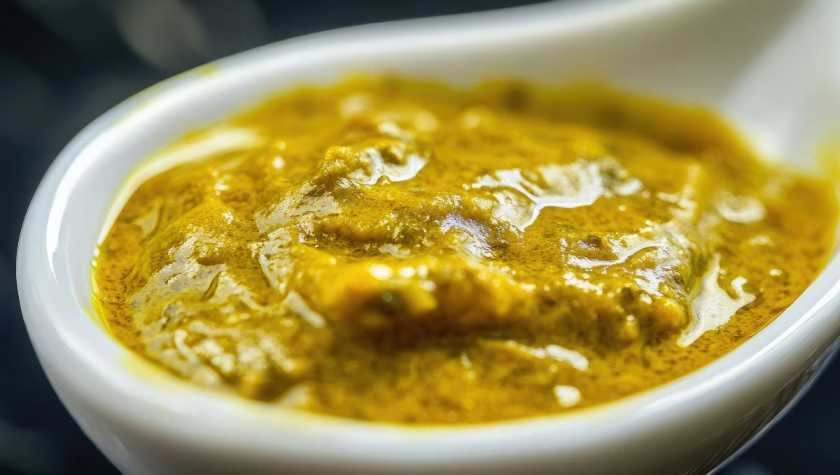
The history of Kasundi is very old. It is believed that it was first made in the Nadia and Faridpur regions. This uniquely tasty chutney is made by mixing mustard seeds, salt, turmeric, chili and a little water and fermenting it for a long time. In those days, it was only made in households, especially during the rainy season, because it was essential to enhance the taste of fish.
Even today, Kasundi has a unique place in the Bengali kitchen. As its taste and usage have increased over time, its popularity has also spread across the country. It is called Bengal’s king of condiments — because it is not just a sauce, it is part of Bengali culture.
The combination of Kasundi with Bengali food
1. The best companion for cutlets and chops
If you put a plate of chicken cutlets or crispy fish chops in front of you, it seems that the taste is not there if there is no spoon of Kasundi next to it. The crunch of Kasundi and the sweet-sour mixture take such snacks to a whole other level. That is why every cabin or food stall in Kolkata always has a bottle of Kasundi.
2. An essential part of Kabiraji cutlets
When you think of the Bengali classic “Kabirji cutlet”, chicken or fish wrapped in crispy egg wrappers comes to mind. But that dish is complete when there is a little Kasundi next to it. Many restaurants have a separate sign saying “Served with Bengal’s king of condiments” because without this taste, Kabiraji is incomplete.
3. Fish Fingers
Kasundi goes well with fish fingers or baked fish in such a way that even foreigners are surprised. The crunch of the kasundi with the tender fish inside the crispy fish finger creates a unique contrast. This pairing has brought kasundi international fame — truly Bengal’s king of condiments!
4. With dry and fried food
Just placing a spoonful of kasundi next to dry, potato, eggplant, or fried food doubles the taste of the rice. Even in many Bengali homes, it is seen that just eating kasundi with hot rice in the morning is a delight.
5. The magic of Kasundi in Kolkata’s street food
Fuchka, jhalmuri, or telebhaja — Kasundi is present in every street food. Adding a little Kasundi to the potato mixture of fuchka gives a different touch to the jhan. It is like the soul of the city’s streets, absolutely Bengal’s king of condiments.
Different types of Kasundi
The form of Kasundi has also changed with time. Now not only mustard Kasundi, but also different flavored Kasundis are available in the market — such as mango Kasundi, coriander Kasundi, garlic Kasundi, etc.
- Mango Kasundi: A sour-spicy-sweet mixture, especially popular during summers.
- Garlic Kasundi: A great choice for those who love jhan.
- Coriander Kasundi: Goes well with fish.
This diversity has enriched Kasundi and proved why it is Bengal’s king of condiments.
Traditional method of making Kasundi
In a real Bengali home, Kasundi is made with care and patience. First, black and white mustard seeds are soaked, then finely ground. Then salt, turmeric, black pepper, and water are added. The mixture is kept in a glass bottle and dried in the sun for a few days. The slow fermentation creates the unique tangy taste of Kasundi.
This process is a tradition of Bengali households, which has been passed down from generation to generation.
The transformation of modern Kasundi
Nowadays, Kasundi is not just a home chutney; it has also found a place in the international market. Be it in Bengali restaurants in Kolkata, Dhaka, or London, Kasundi is served as a special sauce everywhere. Even though foreigners call it “Indian mustard sauce”, true Bengalis know — it is actually Bengal’s king of condiments, whose taste is incomparable to any other sauce.
Read more:- Doda Barfi Recipe: Punjabi Tradition Now in Your Kitchen
Why is Kasundi called Bengal’s king of condiments
- 1. It goes well with every Bengali dish.
- 2. A centuries-old traditional recipe.
- 3. Made with natural ingredients, without any artificial flavors.
- 4. Its perfect balance of pungency, sourness, and saltiness is unmatched by any other sauce.
- 5. Equally popular in domestic to international restaurants — everywhere.
- For all these reasons, it is proudly called Bengal’s king of condiments.
Kasundi is not just a bottle of sauce; it is a symbol of Bengali food culture. A spoonful of Kasundi is like a blend of Bengali emotions, memories, and traditions. Times have changed, food styles have changed, but Kasundi’s place remains unchanged. Truly, there is only one king of Bengali cuisine — Bengal’s king of condiments.

Hi readers. I’m Piyali Batabyal, a passionate blogger who loves to share her thoughts, ideas, and experiences across a variety of topics—from lifestyle and beauty to personal growth and creativity. With a curious mind and a love for words.
Alongside my writing, I am also a professional makeup artist with a flair for enhancing natural beauty and creating transformative looks.