
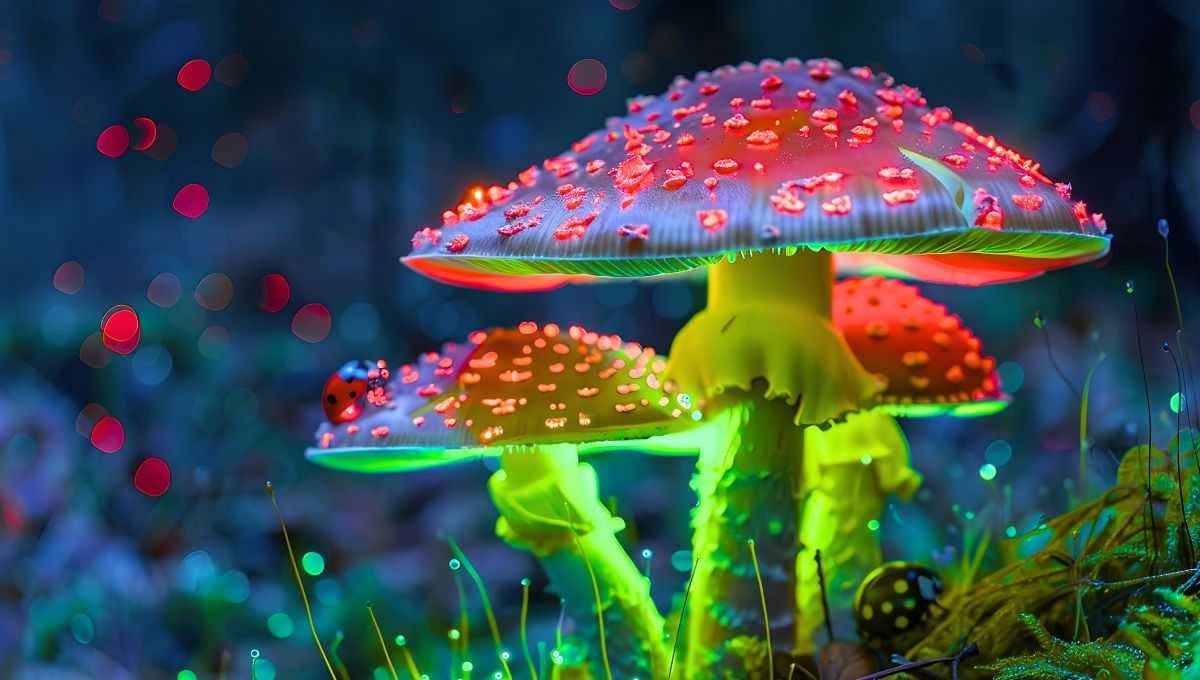
The Wonder of Plants Glowing in the Dark: One night, in the darkness, I suddenly saw a greenish-yellow glow in the forest. It seemed as if someone had lit small lamps underground. As I got closer, I saw that they were not lights – they were the green glow of fungi on a rotten tree trunk. At that moment, I couldn’t believe that nature could be so beautiful and magical! It was then that I realized that nature itself has a living light that shines through the darkness. Today, I am sharing the story of that supernatural and magical being. The wonder of plants glowing in the dark is a supernatural beauty that has been created by the combination of science and nature.
1. The science behind creating light
Bioluminescence is a chemical process where an organism creates light itself. Here, a substance called luciferin reacts with oxygen with the help of an enzyme called luciferase, and energy is released in the form of light.
This process is different from fluorescence or phosphorescence, because here the light is not produced from the outside but from within the organism’s body.
This process is much more common in the ocean, such as some species of jellyfish, plankton, or deep-sea fish. But on land, it is very rare, and here light can mainly be produced by some fungi.
2. Glowing fungi: nature’s own lamp
A kind of soft green light occasionally flashes in the dark forest. It is called “foxfire” or “fairy fire,” which is actually the work of bioluminescent fungi.
These fungi mainly grow on rotten wood or damp soil. For example, a species called Panellus stipticus gives off a light green light on wood. And the fungus Mycena chlorophos emits a bright emerald-green light, which is visible to the naked eye.
This light usually attracts insects at night, as a result of which the fungal spores spread easily. In ancient times, people considered this scene to be supernatural or miraculous. Today, science says that it is a great chemical reaction of nature.
3. “Jack-o’-lantern” mushroom: Halloween light
A stunning orange mushroom, called the Jack-o’-lantern mushroom (Omphalotus olearius), can be found in the dark forest. Its gills or underside emit a light green light in the dark. When the eyes are accustomed to the darkness, a soft light can be seen—as if a small lamp is burning at the base of a tree.
However, it should not be eaten at all, because this mushroom is poisonous. But its soft light fills the forest environment with a mysterious atmosphere at night.
4. The Wonder of Genetic Engineering: “Firefly Petunia”
Just as fungi in nature can produce their own light, scientists have now been able to use genetic engineering to make plants glow. The best example of this is the “Firefly Petunia,” a genetically modified flower.
Scientists have inserted a glowing fungus gene into the plant’s DNA, causing it to emit a soft greenish-white light all the time. This is not a color or light coating—it is a completely natural, organic process.
This petunia is now being sold as an ornamental plant in the United States. It symbolizes the concept of “living light” in the future, where our gardens or patios can light themselves up at night.
5. Artificially Glowing Succulent Plants
Glow-in-the-dark succulents are popular for those who want easy-to-care-for glowing plants. They don’t produce light naturally; Rather, their leaves have phosphorescent particles or harmless nano-coatings that absorb light during the day and emit it at night.
The thick leaves of succulents like Echeveria or Haworthia retain light for a long time. When charged with sunlight or lamp light, they emit soft light for about an hour or two. It is safe, beautiful, and enhances the beauty of modern homes.
Read more:- 10 Fascinating Facts About Honey Bees
6. The luminous plant of the future
Scientists are now trying to create plants that are naturally bioluminescent—not just for beauty, but also as a sustainable lighting alternative.
Imagine—a city where roadside plants become the night lights! MIT and several Russian research organizations have already added genes to plants like tobacco and watercress that emit soft light for several hours.
This technology is still in the experimental stage, but in the future, it could revolutionize urban life, saving electricity and creating environmentally friendly lighting.
7. Bring this light into your home: Some tips
If you want to bring such light into your home or garden, here are some easy ways—
- Choose phosphorescent succulents—they will glow with easy care.
- Use glow-in-the-dark pots or stones—the beauty of the garden will increase.
- Do not collect glowing mushrooms found in the forest; many are poisonous.
- If gene-modified firefly petunias are available in the country, they are a great alternative.
In this way, you can create your own “illuminated garden” in a natural way, where nature’s own light will glow as soon as night falls.
Read more:- How to Plant a Guava Tree in a Pot and Grow It Fast
Conclusion: A world of living light
Plants and fungi that glow in the dark remind us of how deeply connected nature and science are. The soft green light of forest fungi, the genetic brilliance of firefly petunias, or the soft glow of succulents on the balcony—all send the same message: light can also be alive.
This research and innovation will make our future more beautiful, eco-friendly, and imaginative—where nature shines with its own light even at night.

Hi readers. I’m Piyali Batabyal, a passionate blogger who loves to share her thoughts, ideas, and experiences across a variety of topics—from lifestyle and beauty to personal growth and creativity. With a curious mind and a love for words.
Alongside my writing, I am also a professional makeup artist with a flair for enhancing natural beauty and creating transformative looks.