


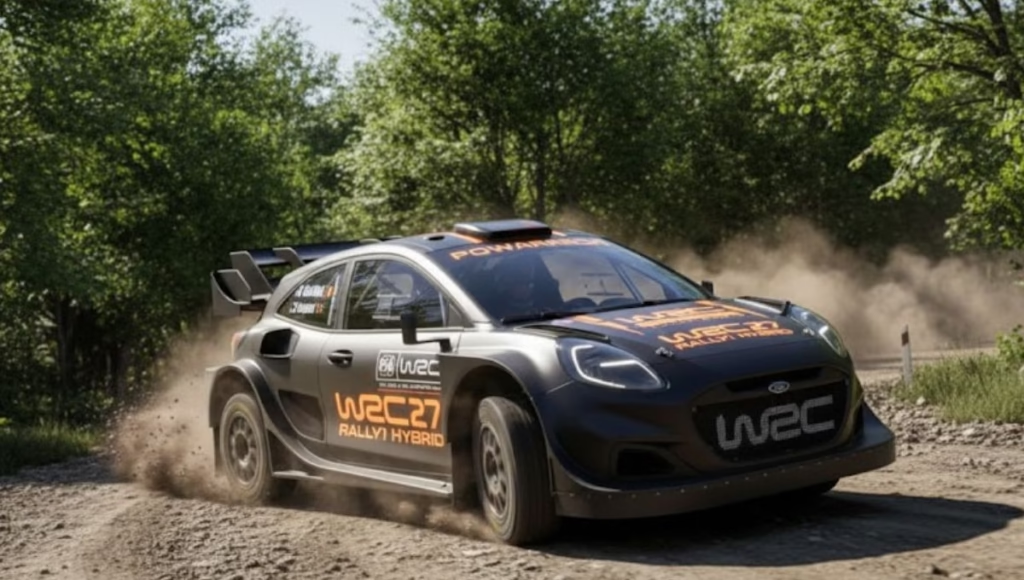
The World Rally Championship is preparing for one of its most significant shifts in history. With the introduction of WRC27, the FIA is redefining how the top tier of rallying works, focusing on accessibility, sustainability, performance, and cost control. Set to reshape rally competition from 2027, the WRC27 regulations bring a new generation of Rally1 machines that promise to thrill fans and welcome more participants into the sport than ever before.
What Is WRC27?
WRC27 refers to the new technical and sporting regulations that will govern the flagship category of the FIA World Rally Championship beginning in 2027. These rules aim to refresh the Rally1 class by making it more accessible to a broader range of constructors, including traditional manufacturers and independent tuners. The key objective is to maintain the high-octane spectacle of world-class rallying while tackling the cost and complexity that have traditionally limited participation at the top level.
The Vision Behind the WRC27 Revolution
The FIA’s motivation for launching WRC27 is rooted in three core principles:
Affordability
One of the biggest barriers in elite rallying has been high development and operating costs. Under the WRC27 framework, the price of a ready-to-compete Rally1 car on tarmac will be capped at around €345,000 — more than 50 percent cheaper than before. Cost savings are achieved through simplified components, shared safety structures, limited personnel, and reduced logistical burdens, making it easier for new teams to enter the championship.
Flexibility and Innovation
Unlike previous Rally1 regulations, the WRC27 rulebook gives constructors much greater freedom. Cars must be built within a defined physical reference volume, but within that space, designers can create unique body styles — from production-inspired shapes to bespoke rally concepts. Simplified aerodynamics and a flexible design philosophy encourage innovation without ballooning costs.
Performance with Purpose
While the engines and mechanicals are designed for accessibility and reliability, the new Rally1 cars will still deliver exciting performance. They will use a sustainably fuelled 1.6-litre turbocharged internal combustion engine (producing about 290 horsepower), a four-wheel-drive system, and a five-speed gearbox. Suspension and other core systems are based on proven Rally2 components to balance cost and capability.
Key Technical Features of WRC27 Rally1 Cars
Safety First
Safety remains a top priority with the introduction of a tubular frame chassis that has been crash tested and simulated to provide improved protection for drivers and co-drivers. This approach reduces overall complexity while enhancing occupant protection in all impact scenarios.
Simplified Aerodynamics
Compared to earlier Rally1 machines, WRC27 cars will have simplified aerodynamic devices, reducing development costs and allowing teams to focus on handling and reliability rather than elaborate aero packages.
Broader Design Freedom
The regulations define a reference volume for car dimensions but do not mandate that rally cars be based on production road cars. Constructors will be free to explore new design ideas, including hatchbacks, sedans, SUVs, or custom creations, as long as they fit within the specified reference space.
Cost-Capped Components
A key feature of WRC27 is its cost-controlled approach, from the main structure to sub-components. Durability and longevity are prioritized to reduce the need for frequent replacements, and constraints are placed on areas that traditionally drive up expenses.
Broader Participation and New Constructors
One of the most exciting developments is that independent tuners — not just established manufacturers — can now compete on equal footing under the umbrella of “constructors.” This change opens the door for projects like Project Rally One, which will build and develop its own WRC27-compliant car ahead of 2027, testing over 6,000 kilometres on gravel and asphalt before homologation.
Read more:- BMW iX xDrive50: Luxury Electric SUV, Range, Features & Performance
What It Means for the World Rally Championship
The introduction of the WRC27 regulations marks a pivotal moment for the World Rally Championship. By lowering costs, fostering innovation, and expanding participation, the FIA aims to create a more competitive, varied, and compelling championship grid.
Fans can expect a new era where rally cars remain thrilling and capable but are easier for teams and drivers to develop and campaign. The mix of body styles, constructors, and technical approaches will make each rally more unpredictable and engaging.
FAQs
What does WRC27 stand for?
WRC27 refers to the set of regulations for Rally1 cars that will be implemented from the 2027 season in the FIA World Rally Championship. These rules are designed to lower costs, increase competitiveness, and broaden participation.
How is WRC27 different from previous Rally1 rules?
Unlike previous Rally1 specifications, WRC27 offers greater design freedom, stricter cost caps, and a unified definition of “constructor” that includes both manufacturers and independent tuners. It also uses simplified aerodynamics and Rally2-based components.
Will WRC27 cars be as fast as current Rally1 cars?
WRC27 cars will be designed to deliver competitive performance with around 290 hp from a 1.6-litre turbocharged engine and four-wheel drive. While the focus is on cost control and accessibility, they are engineered to remain exciting and capable on all rally surfaces.
When will WRC27 regulations take effect?
The WRC27 regulations will come into effect from the 2027 World Rally Championship season.
Can small teams compete in WRC27?
Yes. One of the key aims of WRC27 is to allow small teams and independent tuners to enter the top level of rallying. They can compete as constructors and build cars within the defined framework.


Hi readers. I’m Piyali Batabyal, a passionate blogger who loves to share her thoughts, ideas, and experiences across a variety of topics—from lifestyle and beauty to personal growth and creativity. With a curious mind and a love for words.
Alongside my writing, I am also a professional makeup artist with a flair for enhancing natural beauty and creating transformative looks.