
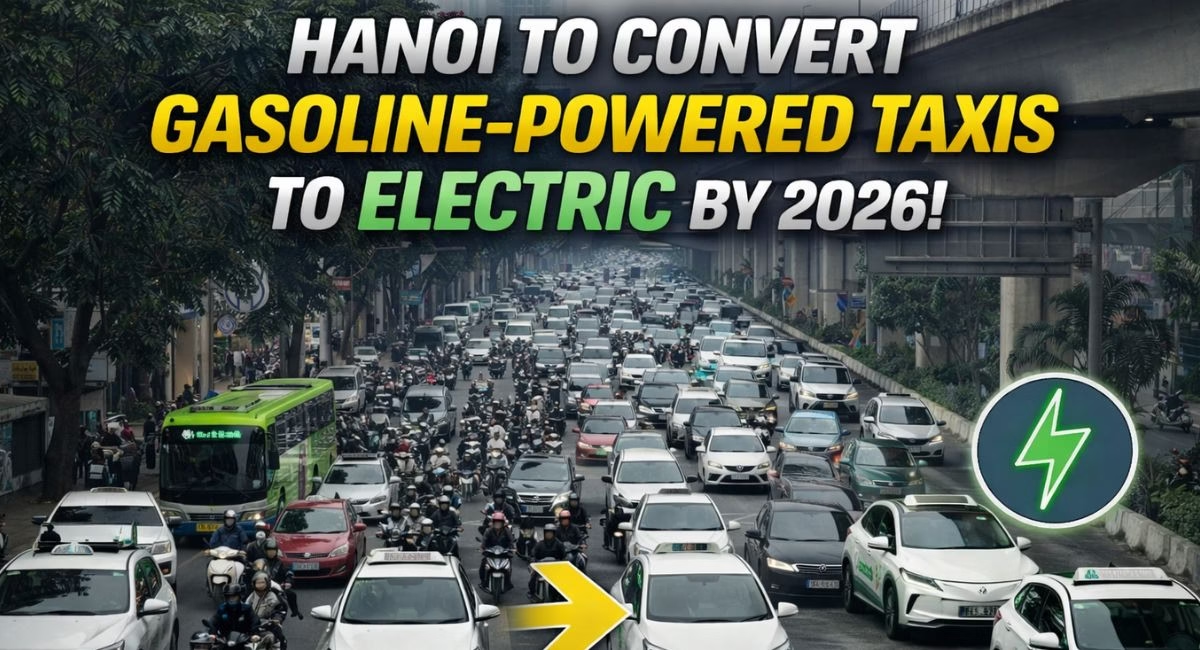
Hanoi is standing at a transportation crossroads. The Vietnamese capital, known for its vibrant street life and dense urban flow, has set an ambitious goal: by 2026, 64% of its gasoline-powered taxis will be converted to electric vehicles.
This is not a symbolic environmental pledge. It is a measurable, time-bound transformation that directly targets one of the city’s most visible contributors to traffic emissions — the taxi fleet.
As someone who has followed urban mobility transitions across Asia and Europe, I can say confidently: taxi electrification is one of the most effective ways to accelerate clean transport adoption. Taxis run longer hours, cover more kilometers daily, and concentrate emissions in densely populated areas. Replacing gasoline-powered taxis with electric alternatives delivers outsized environmental and economic benefits.
In this in-depth analysis, we’ll explore the policy objectives, fleet specifications, infrastructure requirements, economic impact, technical considerations, and long-term implications of Hanoi’s 2026 electrification target.
Why Target Gasoline-Powered Taxis First?
Taxi fleets are uniquely positioned for electrification. Unlike private cars, taxis:
- Operate nearly 18–20 hours per day
- Cover 200–300 kilometers daily on average
- Travel mostly within urban zones
- Have centralized fleet management structures
This makes gasoline-powered taxis disproportionately responsible for urban air pollution relative to their total numbers.
By converting 64% of these vehicles, Hanoi can significantly reduce:
- Carbon dioxide emissions
- Nitrogen oxides (NOx)
- Particulate matter (PM2.5)
- Urban noise pollution
In short, electrifying taxis delivers faster environmental returns than waiting for private car ownership to gradually shift.
The 2026 Target Explained
Hanoi’s plan is precise rather than vague. The city aims to convert 64% of its gasoline-powered taxis to electric by 2026.
To understand the scale:
- Thousands of active taxi units operate across the capital.
- A majority currently rely on internal combustion engines.
- The conversion involves fleet replacement rather than retrofitting engines.
This transition requires coordination among:
- Taxi companies
- Electric vehicle manufacturers
- Charging infrastructure providers
- Urban planning authorities
- Financial institutions
It is a systemic shift, not an isolated procurement exercise.
Read more:- 2027 Chevy Silverado High Country Spied: Is This the Boldest Upgrade Yet for America’s Favorite Truck?
Electric Taxi Specifications: What Will Replace Gasoline-Powered Taxis?
Electrification success depends on vehicle capability. Taxi fleets cannot afford downtime or limited range. The EV models expected to replace gasoline-powered taxis typically include:
Core Electric Taxi Specifications
Battery Capacity:
- 40–70 kWh lithium-ion battery packs
Driving Range:
- 300–450 kilometers per charge (urban cycle)
Charging Time:
- DC Fast Charging: 30–45 minutes (10%–80%)
- AC Charging: 6–8 hours (overnight)
Motor Output:
- 100–150 kW electric motor
Torque Delivery:
- Instant torque, typically 250–310 Nm
Top Speed:
- 130–160 km/h (well above city requirements)
Energy Consumption:
- 14–18 kWh per 100 km
Operating Cost Per Kilometer:
- 30–50% lower than gasoline vehicles (depending on electricity rates)
These specifications make electric taxis highly viable replacements for gasoline-powered taxis, especially for high-density urban service routes.
Environmental Impact: Measurable Emission Reduction
Electrifying 64% of gasoline-powered taxis could yield dramatic improvements in urban air quality.
Potential Annual Impact Per Taxi
- 20,000–25,000 liters of gasoline avoided
- 40–50 tons of CO2 emissions reduced
- Significant reductions in tailpipe pollutants
Multiply that across thousands of taxis, and the city’s emissions profile changes materially.
Additionally, electric vehicles eliminate idle emissions — a major issue in congested urban areas.
Infrastructure: The Real Challenge
Vehicle procurement is only half the equation. Charging infrastructure determines operational success.
Charging Infrastructure Requirements
To support the transition, Hanoi must deploy:
- Public fast-charging hubs in high-traffic zones
- Dedicated fleet charging depots
- Nighttime depot charging stations
- Smart grid integration systems
Power Demand Considerations
Electrifying 64% of gasoline-powered taxis increases electricity demand. However:
- Charging can be scheduled during off-peak hours
- Smart grid systems can balance load
- Renewable energy integration can reduce overall emissions footprint
This is not merely a transport upgrade. It’s an energy management transformation.
Economic Implications for Taxi Drivers
Taxi drivers often operate on tight margins. Transitioning from gasoline-powered taxis to electric vehicles changes the cost structure.
Cost Comparison
Gasoline Taxi Costs:
- High daily fuel expenses
- Engine maintenance (oil, filters, belts)
- Exhaust system repairs
- Transmission servicing
Electric Taxi Costs:
- Lower per-kilometer energy cost
- Fewer moving parts
- Reduced maintenance frequency
- No oil changes
However, EVs typically have higher upfront purchase prices. To mitigate this, financial models may include:
- Government subsidies
- Leasing programs
- Low-interest financing
- Fleet-based purchasing discounts
In many global markets, taxi drivers report net savings within 2–3 years after switching.
Passenger Experience: A Noticeable Difference
Replacing gasoline-powered taxis also improves passenger comfort.
Electric taxis offer:
- Quieter rides
- Smoother acceleration
- Reduced vibration
- Improved in-cabin air quality
These factors matter in high-density cities like Hanoi, where daily commuting is intense and frequent.
Policy Framework and Government Role
Hanoi’s strategy likely involves multi-layered incentives and regulations:
- Gradual phase-out timelines for gasoline-powered taxis
- Registration restrictions on new combustion taxis
- Priority licensing for electric taxis
- Financial incentives for fleet conversion
Urban policy plays a decisive role in ensuring the 64% target is realistic rather than aspirational.
Lessons from Global Cities
Cities such as Shenzhen, Oslo, and London have already electrified large portions of their taxi fleets.
Shenzhen, for example, achieved near-total taxi electrification through:
- Heavy infrastructure investment
- Strong central coordination
- Long-term fleet transition planning
Hanoi can leverage similar models while adapting to local conditions.
Operational Challenges Ahead
No large-scale fleet conversion is without friction.
Key Challenges
- Charging station congestion
- Battery degradation over high mileage
- Driver retraining needs
- Grid capacity constraints
- Resale value uncertainties
However, modern battery warranties often extend to 8 years or 160,000 kilometers, reducing risk concerns.
The Broader Urban Mobility Strategy
Electrifying gasoline-powered taxis is only one component of Hanoi’s sustainability roadmap.
Complementary strategies may include:
- Expanding metro lines
- Promoting electric buses
- Encouraging electric motorcycles
- Implementing low-emission zones
The taxi sector serves as a visible, high-impact starting point.
Long-Term Environmental and Health Benefits
Reducing emissions from gasoline-powered taxis contributes to:
- Lower respiratory illness rates
- Improved urban visibility
- Reduced healthcare costs
- Enhanced tourism appeal
Cleaner transport systems correlate strongly with public health improvements.
Economic Ripple Effects
Taxi electrification stimulates multiple sectors:
- EV manufacturing
- Charging infrastructure construction
- Battery servicing industries
- Renewable energy investment
It positions Hanoi as a forward-thinking capital in Southeast Asia.
Risk Assessment: Is 64% Achievable?
Ambition must meet execution.
Achievability depends on:
- Clear regulatory enforcement
- Infrastructure rollout pace
- Financial accessibility for drivers
- Public acceptance
If these align, 64% is aggressive but attainable.
A Defining Moment for Urban Transport
Hanoi’s plan to convert 64% of gasoline-powered taxis to electric by 2026 represents more than fleet modernization. It signals a structural shift in how the city approaches mobility, energy, and public health.
Taxi electrification is one of the most practical, visible, and economically sensible steps a dense city can take toward sustainability.
The transition will require capital, coordination, and careful execution. But if successful, Hanoi could become a regional model for urban transport reform — demonstrating how replacing gasoline-powered taxis with electric alternatives can reshape an entire city’s environmental future.
The road to 2026 is ambitious. But the direction is clear.
FAQs
Why is Hanoi replacing gasoline-powered taxis with electric vehicles?
Because taxis contribute significantly to urban emissions. Electrifying them reduces air pollution, carbon output, and fuel dependency while lowering long-term operating costs.
How much range do electric taxis typically have?
Most electric taxis operate with a 300–450 km driving range per charge, sufficient for daily urban service with strategic charging.
Will taxi fares increase due to electrification?
In many cities, operating cost reductions offset higher purchase prices. Over time, fares may stabilize or even decrease if savings are passed on.
How long does it take to charge an electric taxi?
Fast charging typically takes 30–45 minutes for an 80% charge. Overnight depot charging may take 6–8 hours.

Hi readers. I’m Piyali Batabyal, a passionate blogger who loves to share her thoughts, ideas, and experiences across a variety of topics—from lifestyle and beauty to personal growth and creativity. With a curious mind and a love for words.
Alongside my writing, I am also a professional makeup artist with a flair for enhancing natural beauty and creating transformative looks.