
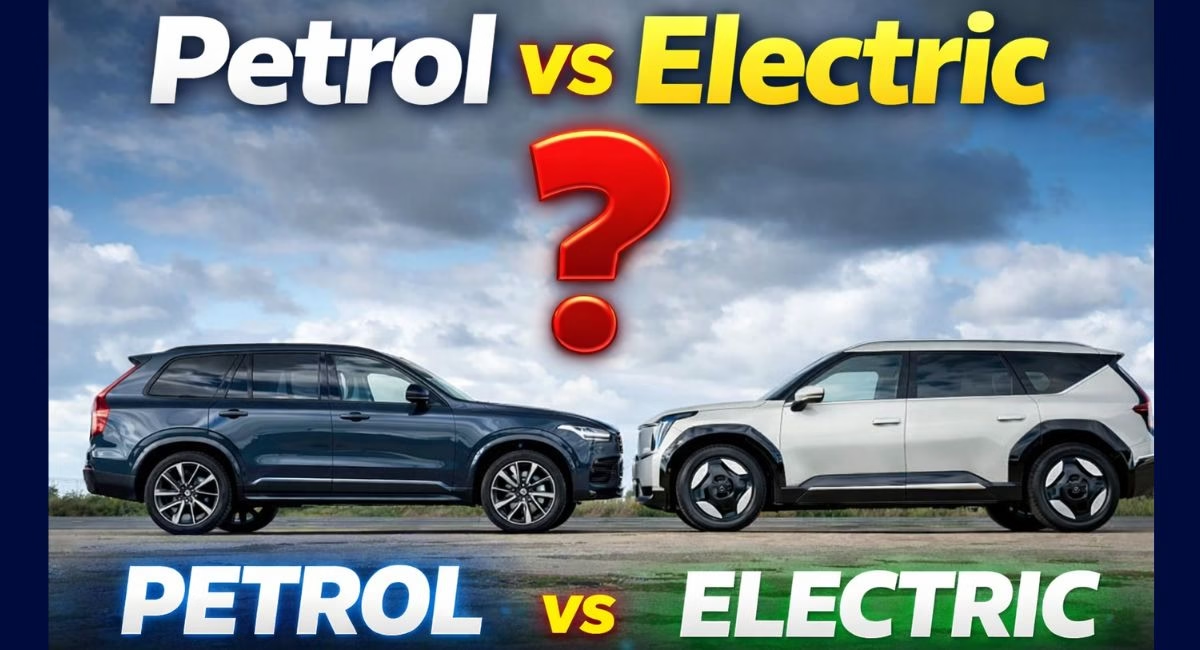
The debate around Petrol or electric vehicles has grown louder than ever. Governments are setting emissions targets, fuel prices fluctuate unpredictably, charging networks expand each year, and manufacturers are pouring billions into electrification. Yet for everyday drivers, the question remains deeply personal:
Which one makes sense for me?
After years of evaluating both internal combustion and electric vehicles, I’ve learned that the answer isn’t ideological. It isn’t about trends. It isn’t even strictly about the environment.
It’s about usage.
Your commute. Your budget. Your access to charging. Your expectations from a car.
Let’s break this down in a practical, experience-driven way so you can confidently decide whether petrol or electric is the right fit for your life.
Understanding the Core Differences
Before diving into ownership factors, we need clarity on how these vehicles fundamentally differ.
Petrol Cars: Traditional Internal Combustion
Petrol vehicles use an internal combustion engine (ICE) that burns fuel to generate power. This system has been refined over more than a century and remains globally dominant.
Typical Petrol Car Specs (Mid-Size Segment):
- Engine: 1.0L–2.0L turbocharged petrol
- Power Output: 90–200+ hp
- Torque: 150–320 Nm
- Transmission: Manual or automatic
- Fuel Efficiency: 15–22 km/l (varies by region and model)
- Refueling Time: 3–5 minutes
- Driving Range: 500–700 km per tank
Petrol cars are familiar, convenient, and supported by extensive fueling infrastructure worldwide.
Electric Vehicles (EVs): Battery-Powered Mobility
Electric vehicles operate using electric motors powered by battery packs. There is no combustion, no exhaust, and significantly fewer moving parts.
Typical Electric Vehicle Specs (Mid-Size Segment):
- Battery Capacity: 40–75 kWh
- Power Output: 120–250 hp
- Torque: 250–400+ Nm (instant delivery)
- Transmission: Single-speed automatic
- Range: 250–500 km per charge
- Charging Time:
- Fast DC Charging: 30–60 minutes (10–80%)
- Home AC Charging: 6–10 hours
- Regenerative Braking: Yes
Electric vehicles emphasize efficiency, low running costs, and smooth acceleration.
Purchase Price: The First Major Consideration
In most markets, electric vehicles still cost more upfront than comparable petrol cars. Battery technology and newer production processes contribute to this difference.
Petrol Advantage:
- Lower initial purchase price
- Broader selection across all price brackets
- Often discounted heavily by dealerships
Electric Advantage:
- Government incentives (varies by country)
- Lower road tax in some regions
- Future resale demand in EV-forward markets
If your budget is tight and financing flexibility matters, petrol may currently offer more affordability.
However, price is only one part of the ownership equation.
Read more:- Chery iCar V23-Based EV Set for India: The Rugged Electric SUV That Could Disrupt the Urban Off-Road Segment
Running Costs: Where Electric Often Wins?
When we shift focus from purchase cost to daily use, the picture changes.
Fuel vs Electricity Cost
Petrol prices fluctuate based on global markets. Electricity rates are generally more stable, especially if you charge at home.
On average:
- Petrol cost per km: Higher and variable
- Electric cost per km: Significantly lower
Charging overnight at residential rates often makes EV ownership noticeably cheaper for high-mileage drivers.
Maintenance Differences
Petrol vehicles require:
- Oil changes
- Spark plug replacement
- Timing belt maintenance
- Exhaust system servicing
- Transmission servicing
Electric vehicles eliminate many of these requirements.
EV maintenance typically includes:
- Brake fluid checks
- Tire rotations
- Cabin filter replacement
- Software updates
- Battery health monitoring
Because EVs have fewer moving mechanical parts, long-term servicing costs are often lower.
If you drive daily and accumulate high mileage, electric ownership may reduce total operating expenses over time.
Driving Experience: Two Very Different Personalities
Beyond cost, driving feel matters more than many people realize.
Petrol Driving Experience
- Engine sound feedback
- Gear shifts (manual or automatic)
- Familiar acceleration curve
- Refueling convenience for long trips
Some drivers enjoy the mechanical engagement of a petrol engine. There’s character in revving an engine, especially in performance-oriented models.
Electric Driving Experience
- Instant torque from standstill
- Near-silent operation
- Smooth, uninterrupted acceleration
- Regenerative braking feel
Electric cars feel quick in city conditions due to immediate torque delivery. Even modest EVs often outperform petrol equivalents in low-speed acceleration.
However, some drivers find the silence and lack of engine feedback less engaging.
Your preference here is deeply personal.
Range Anxiety vs Refueling Ease
One of the biggest decision factors in the petrol or electric debate is range confidence.
Petrol Strength:
- 500–700 km range common
- Refueling takes minutes
- Fuel stations widely available
Long highway drives are simpler with petrol vehicles, especially in areas with limited charging infrastructure.
Electric Reality:
- 250–500 km range typical
- Charging requires planning
- Infrastructure improving rapidly
If you live in an urban area with reliable charging networks — or better yet, have home charging — EV ownership becomes significantly more practical.
If you frequently travel long rural distances without predictable charging stops, petrol still offers convenience.
Charging Access: The Deciding Factor
In my professional assessment, this is the single most important consideration.
Ask yourself:
- Can I install a home charger?
- Does my apartment building allow EV charging?
- Are public chargers reliable in my area?
If the answer is yes, electric becomes highly viable.
If not, depending entirely on public charging may become inconvenient and stressful.
Charging convenience determines whether EV ownership feels effortless or frustrating.
Environmental Considerations
Electric vehicles produce zero tailpipe emissions. Petrol cars emit CO₂ and other pollutants during operation.
However, full lifecycle impact includes:
- Battery production emissions
- Electricity generation source (coal vs renewable)
- Vehicle manufacturing footprint
In regions with cleaner energy grids, EVs significantly reduce overall emissions. In regions reliant on fossil fuel electricity, environmental benefits are reduced but still generally favorable over long-term use.
For eco-conscious buyers, electric usually aligns better with sustainability goals.
Longevity and Battery Life
Battery degradation is often misunderstood.
Modern EV batteries typically offer:
- 8-year warranty coverage
- 70–80% capacity retention after extended use
Real-world data suggests battery life is more durable than early concerns implied.
Petrol engines, when maintained well, can last decades. However, they involve more mechanical wear components.
Both technologies can be reliable if properly maintained.
Resale Value and Future Regulations
Governments worldwide are tightening emission standards and planning future restrictions on combustion vehicles.
While petrol cars remain legal and usable for many years, long-term resale values may shift as electrification expands.
EV adoption trends suggest stronger resale value retention in EV-supportive markets.
Future policy direction matters when evaluating long-term ownership.
Who Should Choose Petrol?
Petrol vehicles make sense if:
- You drive long distances frequently
- You lack home charging access
- You prefer traditional driving feel
- You need lower upfront purchase cost
- Charging infrastructure is limited in your region
Petrol remains practical, accessible, and dependable.
Who Should Choose Electric?
Electric vehicles are ideal if:
- You commute daily within moderate range
- You have home charging
- You want lower running costs
- You prefer smooth, quiet performance
- You value environmental benefits
- You live in urban or suburban areas with growing EV infrastructure
For many city drivers, electric ownership becomes not just viable — but more convenient.
The Financial Reality: Total Cost of Ownership
To truly answer petrol or electric, you must calculate total cost over 5–8 years:
- Purchase price
- Fuel or electricity cost
- Maintenance
- Insurance
- Resale value
- Tax incentives
Often, EVs close the cost gap over long-term ownership, especially for high-mileage drivers.
Short-term owners may see less financial difference.
The Psychological Factor
Decision-making isn’t purely rational.
Some buyers feel comfort in familiarity — petrol engines have over a century of trust.
Others feel excited by innovation and future-focused mobility.
Neither emotion is wrong.
Ownership satisfaction matters as much as spreadsheet comparisons.
The Bottom Line: It Truly Depends on You
There is no universal answer to petrol or electric.
If your lifestyle supports charging and daily commuting, electric offers financial and environmental advantages.
If you prioritize spontaneous long-distance travel with zero planning and lower upfront costs, petrol remains a strong contender.
The right choice isn’t about trend adoption. It’s about alignment with your daily reality.
Make the Choice That Matches Your Life
The petrol or electric decision isn’t about superiority — it’s about suitability.
Technology is evolving quickly. Infrastructure is improving. Costs are shifting.
Instead of asking which is better, ask which is better for your circumstances.
That’s the only answer that truly matters.
FAQs
Is electric cheaper than petrol in the long run?
In many cases, yes. Lower energy and maintenance costs often reduce total ownership expenses over several years, especially for high-mileage drivers.
How long do electric car batteries last?
Most modern EV batteries are designed to last 8–15 years, with warranties typically covering 8 years or a specific mileage threshold.
Is charging an electric car difficult?
Charging is simple if you have home access. Public charging networks vary by region, so local infrastructure is a key factor.
Are petrol cars going to be banned soon?
While many countries plan to phase out new petrol car sales in the future, existing vehicles will remain usable for many years.

Hi readers. I’m Piyali Batabyal, a passionate blogger who loves to share her thoughts, ideas, and experiences across a variety of topics—from lifestyle and beauty to personal growth and creativity. With a curious mind and a love for words.
Alongside my writing, I am also a professional makeup artist with a flair for enhancing natural beauty and creating transformative looks.