


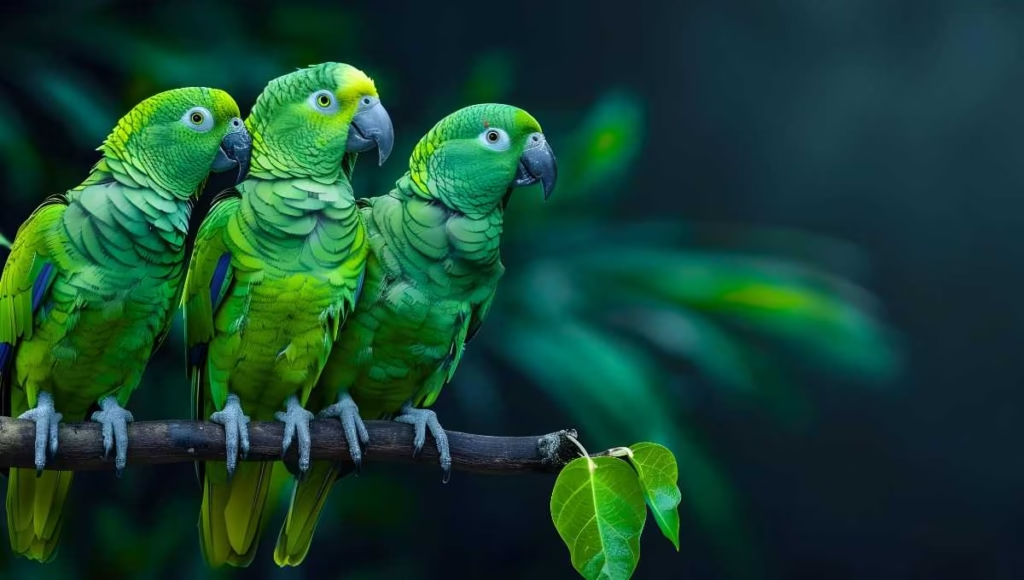
Parakeet vs parrot: This topic is often discussed among bird lovers. Many people think that parakeets and parrots are the same species, while others see a big difference between them.
In the previous article on the Bird category, I talked about Macaw VS Parakeet, but in this blog, I will highlight some things about Parakeet vs Parrot. Let’s analyse it only, so that you get a clear idea of what is actually true and what is misunderstood in the comparison of parakeet vs parrot.
What is a Parakeet? What is Parrot?

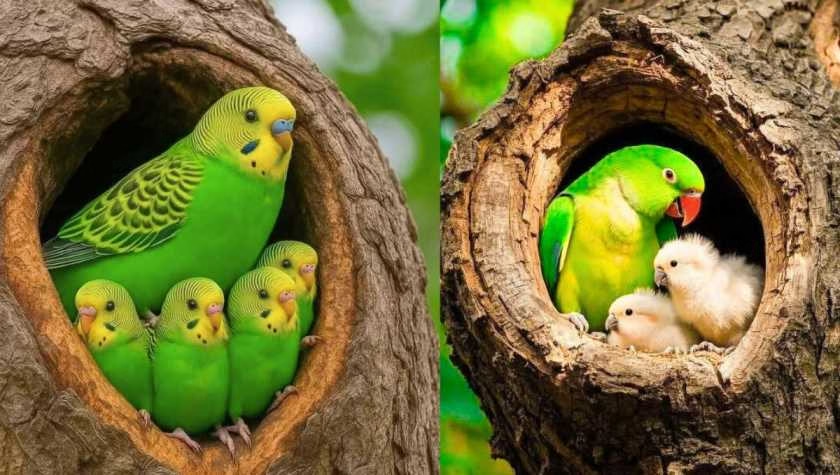
First of all, it is necessary to understand what is the meaning behind the words parakeet and parrot.
Parrot: This is a large family of parrots (Psittacidae), which has thousands of species.
Parakeet (small parrot): Parakeet is actually a special category, which refers to small or medium-sized parrots, especially those birds that have long tails.
So, all parakeets are parrots, but not all parrots are parakeets.
This is where the parakeet vs parrot conversation begins, as people often use the terms interchangeably.
History and Classification
Parrots: This family includes many species, large parrots (such as macaws), medium-sized parrots, and small parrots.
Parakeets are small to medium-sized parrots that come in many different types: budgerigars, ringneck parakeets, conures, etc.
It’s like the apple and the fruit; parakeet is a specific type, “parrot” is a larger umbrella term that covers many different types of birds.
Size and Physical Characteristics
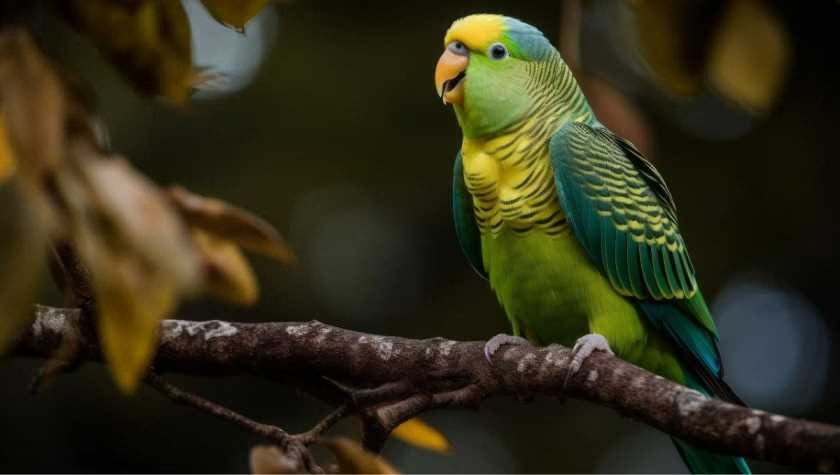
They also differ in size and body structure when comparing parakeets vs parrots:
Tail and Body Shape
Parakeets usually have long, pointed tail feathers.
Unlike many other parrots, their tails are relatively short and wide at the base.
Head and beak
Parakeets generally have round heads and proportionally small beaks.
Some parrot species have beaks that are larger and more robust, as seen in larger parrots.
Body size
Parakeets have a standard length measurement of a few inches (about 7-8 inches in the case of budgerigars, for example).
However, there are many species in the parrot family, some very large, some small, so sizes vary greatly.
Significant Differences: Parakeet vs Parrot
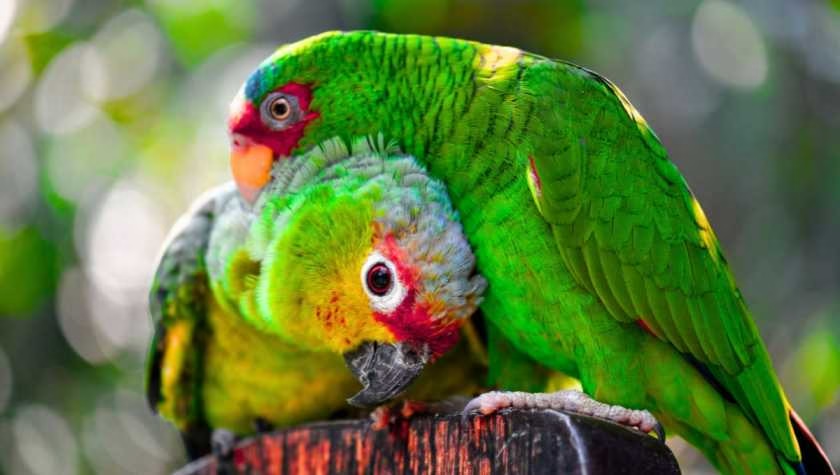
When we talk about parakeet vs parrot, people often confuse the two. Although both belong to the same bird family, they have clear differences. Here is a clean comparison:
Parakeet vs Parrot Comparison Table
| Feature | Parakeet (Small Parrot) | Parrot (General / Larger Parrot Family) |
|---|---|---|
| Classification | A subgroup of small or medium-sized parrots | A large family of parrots with many species |
| Tail | Usually long, slim, and pointed | The tail can be short, medium, or long, depending on the species |
| Size & Weight | Small to medium | Small to very large (wide variety) |
| Handling Ease | Many species are easy to handle and tame | Depends on species; large parrots can be strong and challenging |
| Talking Ability | Many parakeets can mimic; budgies are especially good talkers | Many parrots talk, with large species (macaw, cockatoo) having stronger mimic skills |
| Space Requirement | Needs smaller cages and less room | Larger parrots require bigger cages and more space |
Behavior and Personality
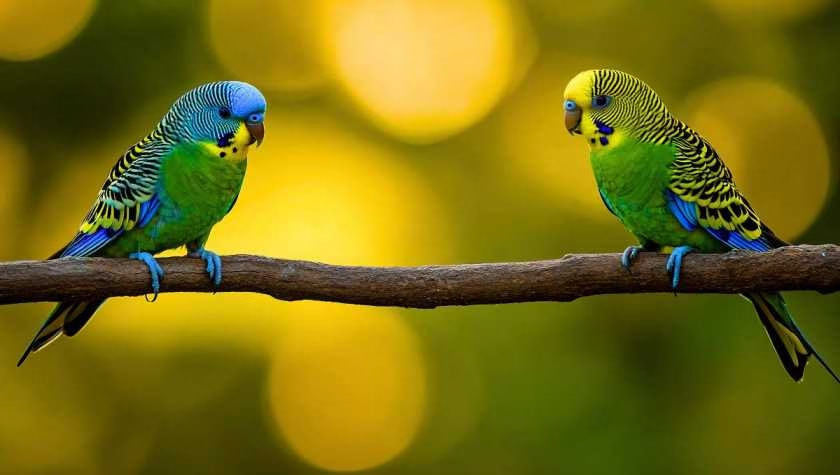
Behavior is a very important aspect of parakeet vs parrot:
Parakeets are generally social birds. They get along well with people and other parakeets.
Many species of parakeets can be very sweet, calm, and friendly.
On the other hand, even large parrots exhibit diverse behaviors; some are very friendly, while others can be independent or aggressive, depending on the species and individual personality.
Understanding the term “Parakeet vs Parrot”:
Many people mistakenly use the terms parakeet and parrot interchangeably, but this is not scientifically correct. These words make it clear that parakeets are a general category or group that falls under the parrot family, and not all parrots are parakeets.
Parakeet vs Parrot: Comparison from a Care Perspective
From a birding perspective, “parakeet vs parrot” is an important question in itself, because their needs, care, and environment can be quite different:
Housing (Cage and Ground)
A medium-sized parrot is usually best for parakeets, as they are relatively small and have tails.
Larger parrots may need a larger and sturdier cage. They need more space so they can move around well.
Diet
Parakeets generally prefer seeds, vegetables, and fruits, and they require high-quality commercial feed.
Larger parrots can have a more varied diet, not just seeds, but also fruits, nuts, special poultry feed or pellets, etc.
Social Needs
Parakeets thrive in flocks and love companionship.
Some parrot species are solitary, while others are very social. Needs vary by species.
Talking and Training
Parakeets, such as budgies, are very talkative.
Some parrot species are very vocal and can imitate conversation or sounds from the environment; however, not all parrots are the same.
Patience is essential in training, especially if the bird is new.
Read more:- Virus Outbreak Divides Brazil Over Return of Spix’s Macaws
Care and Health
Small parakeets can be relatively easy to care for, as they are generally inexpensive to keep and their diets may not be as complex.
Larger parrots can be more complex and expensive to care for (training, toys, veterinary check-ups).
Parakeet vs Parrot Misconceptions Solved
Here are some clear solutions to some of the common misconceptions:
- Not all parrots are parakeets: Many people use the words interchangeably, but as we have seen, parakeets are a small group of the parrot family.
- Misclassification: Some people consider budgerigars to be “all parakeets,” but the entire parakeet group is very diverse.
- Over-ambitious notion: The idea that large parrots are always very talkative or “talkative” is wrong. Many parrot species are less talkative or less vocal.
- Ignoring care needs: Parakeets are easy birds; this idea also does not always apply. Needs depend on the species and personality.
Parakeet vs Parrot: Which one is for you?
If you are considering getting a bird, and are wondering whether to get a parakeet or parrot, here are some things to consider:
Your experience
For new bird owners, parakeets are often a good choice to start with. They are generally small, calm, and relatively easy to train.
For experienced bird owners, you may want to consider a larger parrot if you are willing to give up the space, time, and budget.
Space and environment
If your living space is limited, a smaller parakeet may be more reasonable.
Larger parrots may need a larger cage and play space. Many bird lovers adopt beautiful African grey parrots, but before adopting a person should know the way to keep them i the home.
Social interaction
If you want to be more involved with your bird, talk to it and train it. Choose a parrot or parakeet that is social and interactive.
If you prefer a little less interaction, or if the bird is better off alone, you may want to choose a species that is social and interactive.
Long-term commitment
Consider the lifespan of the bird. Some parrots live for several years, so this can be a long-term commitment.
Plan your budget from a food, healthcare, and care perspective.


Hi readers. I’m Piyali Batabyal, a passionate blogger who loves to share her thoughts, ideas, and experiences across a variety of topics—from lifestyle and beauty to personal growth and creativity. With a curious mind and a love for words.
Alongside my writing, I am also a professional makeup artist with a flair for enhancing natural beauty and creating transformative looks.