


The question of “Largest Ice Apple” is of interest to many, because the ice apple is not just a traditional hot summer fruit, but also a historical and nutritious fruit that is also important politically, economically and culturally in some countries.
Below is a detailed discussion of the Largest Ice Apple producing countries, why that country is at the top, the characteristics, challenges and prospects of Ice Apple.
Who is the “Largest Ice Apple” producer?

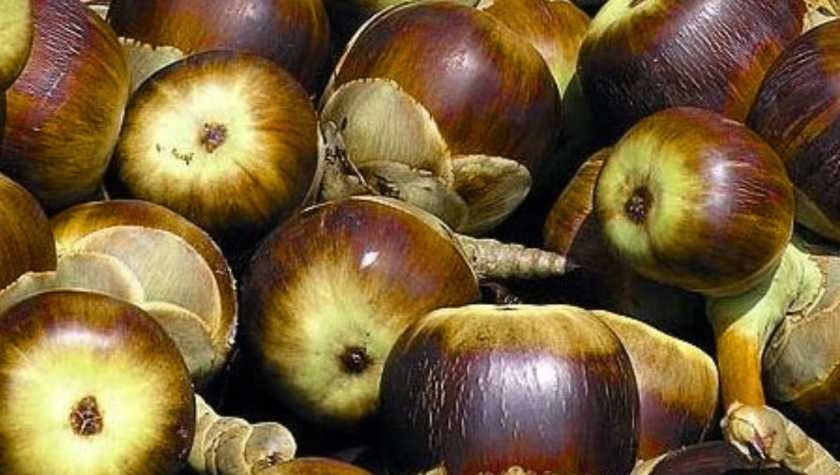
India is the largest ice apple-producing country in the world.
Some states in India, in particular, such as Tamil Nadu, Andhra Pradesh, Odisha, West Bengal and Bihar, are rich in palmyra trees (Borassus flabellifer), and Ice Apple production is widespread.
This is why India’s climate, with its hot summers and high temperatures, plays a supportive role, allowing the Palmyra palm tree to grow healthily.
What is Ice Apple?
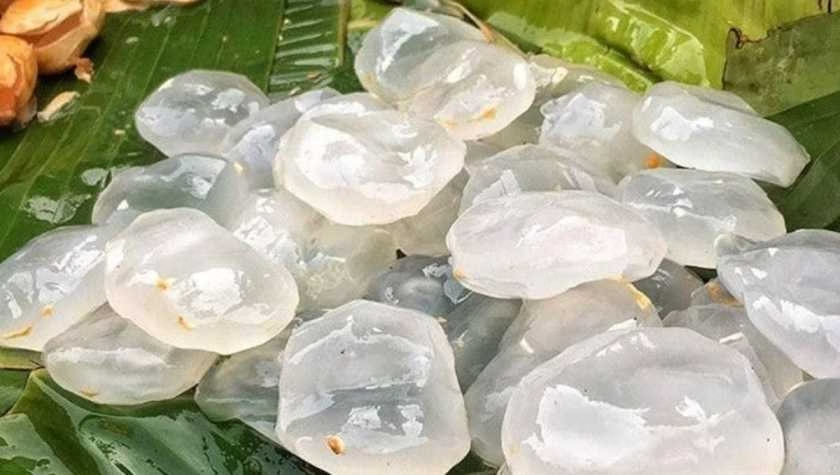
Ice Apple, locally known as Nunggu or Tadgola, is a young fruit of the Palmyra palm.
Its structure is not firm; the inner part is membranous and jelly-like, naturally rich in water.
It is used as a natural source of hydration and cooling during hot weather, as the fruit contains electrolytes, such as potassium, and a lot of water.
Local vendors usually sell it on the roadside, especially in the southern regions of India, where the Ice Apple is very popular during the summer.
Why is India the “Largest Ice Apple” producer?
There are a few factors that have established India as the largest ice apple producer in the world:
Weather and Climate
The Indian states where Ice Apple is produced have hot, humid and long summers.
Palmyra palm trees can tolerate this type of climate very well and can bear fruit for a long time.
Geographical distribution
In India, palm trees are naturally distributed in many areas — rural areas of South and East India are particularly suitable.
There is a local demographic demand, as Ice Apple is popularly consumed in summer.
Social and economic importance
Selling Ice apples is a seasonal source of income in the rural economy.
Other parts of the tree (such as tamarind leaves, sap, wood), other than the fruit, are used locally for various purposes, making palm tree cultivation financially viable in India.
Rural farmers see Ice Apple cultivation as a reliable alternative, as the tree is long-lasting and requires relatively little maintenance.
Read more:- Death Valley: Life Inside The Hottest Place on Earth
Other top Ice Apple-producing countries
Apart from India, some countries play a significant role in Ice Apple or Palmyra Palm production:
- Thailand: Thailand has palm trees, and some Ice Apple is produced.
- Cambodia: Cambodia has Palmyra palm trees, and Ice Apple is sold in rural areas.
- Sri Lanka: Palm trees and Ice Apple are popular there, especially in the coastal areas of the country.
- Indonesia: Palm trees are found in some areas, and Ice Apple is available in the local market.
However, the production of these countries is much less than that of India in the world, so India clearly tops the list as the largest ice apple-producing country.
Read more:- 18 Inspiring Balcony Design Ideas for Modern Homes: The Complete Guide
Nutritional and Health Importance of Ice Apple
The term “Largest Ice Apple” does not only mean production, it also plays an important role in human health as a nutritious fruit:
Since Ice Apple is full of water, it provides natural hydration. It helps to relieve heat and keep the body cool in hot summers.
It contains Electrolytes (such as potassium), which help the body maintain balance.
In addition, Ice Apple contains some minerals and vitamins that are required for health and are helpful in maintaining natural well-being.
Looking at the growth of the tree, the Palmyra palm-ek can easily survive in very adverse environments and can play a role in preventing land erosion, a combination of economic farming and environmental sustainability.
Challenges and Obstacles
Although India is the top producer of the “Largest Ice Apple”, there are some challenges and obstacles:
Market supply and seasonality
Ice Apple is generally a seasonal fruit. It is not available all year round.
Marginal farmers in the regions where it is cultivated sometimes face market and supply chain issues.
Price fluctuations
Street vendor prices can be highly volatile. For example, some users reported that Ice Apples are priced very high in Bangalore, which shows huge profits in some areas.
Price fluctuations can create uncertainty for both farmers and vendors.
Cultivation and maintenance
Although Palmyra palm trees are relatively durable, they require skill in cultivation and fruit harvesting.
The trees may not bear fruit in the first few years after planting, which can make farmers feel the investment is risky.
Weather changes
Climate change and variable rainfall can affect the growth of palm trees.
Excessive heat or irregular rainfall can reduce yields and narrow the “Largest Ice Apple” position margin.
Future Prospects
There are some promising opportunities for India as the “Largest Ice Apple” producing country in the future:
Innovative farming techniques: Improved farming techniques, improved varieties or water conservation technologies can help farmers increase Ice Apple production.
Processing and value addition: Ice Apple can be made into jellies, cold drinks, dry fruits or frozen packs, which will increase the income source of farmers.
International markets: If the demand for Ice Apple increases abroad, India and other producing countries can get export opportunities.
Ecological farming: Palmyra palm trees retain soil, and their cultivation is naturally sustainable, which is beneficial from both agricultural and environmental perspectives.
Conclusion
India is clearly on top as the “Largest Ice Apple” producing country.
Ice Apple is a nutritious, water-rich and naturally cooling fruit in summer, the production and demand of which has a profound impact on the Indian rural economy.
Although production is on a large scale, there are challenges such as price fluctuations, seasonal supply and cultivation maintenance. But in the future, processing, export and sustainable farming techniques could further enrich the industry.
From an economic, social and environmental perspective, Ice Apple production is not just about yield; it is a potential emerging industry and the “largest ice apple” title is just a symbol.


Hi readers. I’m Piyali Batabyal, a passionate blogger who loves to share her thoughts, ideas, and experiences across a variety of topics—from lifestyle and beauty to personal growth and creativity. With a curious mind and a love for words.
Alongside my writing, I am also a professional makeup artist with a flair for enhancing natural beauty and creating transformative looks.