


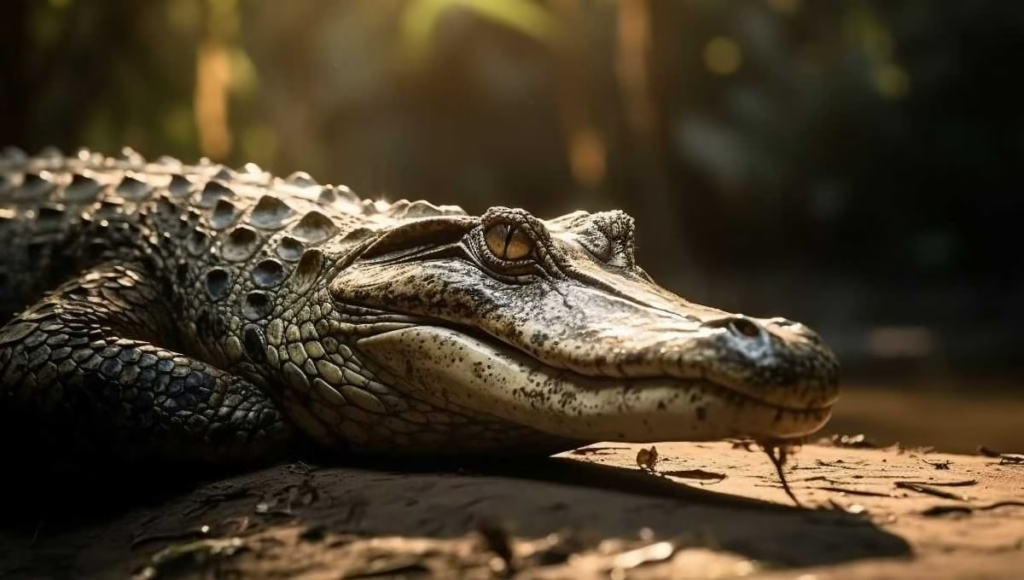
Crocodiles are among the most fascinating survivors in the history of life on Earth. While dinosaurs vanished during catastrophic extinction events, crocodiles continued to exist and evolve. This raises an important question: how did crocodiles survive extinction when so many powerful species failed?
Crocodiles first appeared more than 200 million years ago and lived alongside dinosaurs for millions of years. When the mass extinction event occurred around 66 million years ago, nearly 75 percent of all species became extinct. Yet crocodiles endured. Their survival was not accidental. It was the result of a unique combination of biological traits, behaviors, and environmental advantages.
This article examines the actual reasons why crocodiles have survived extinction, revealing the evolutionary strategies that have enabled them to becomeone of nature’s most successful survivors.
Life During the Age of Dinosaurs
Before understanding how crocodiles survive extinction, it is important to understand the world they lived in. During the age of dinosaurs, Earth was warm, lush, and filled with diverse life forms. Crocodilian ancestors existed in many shapes and sizes, some living on land while others thrived in water.
When a massive asteroid impact changed the planet’s climate, food chains collapsed rapidly. Plants died, herbivores starved, and predators soon followed. Most large animals could not adapt quickly enough to this sudden change. Crocodiles, however, were already equipped with survival advantages.
Semi-Aquatic Lifestyle: A Major Survival Advantage

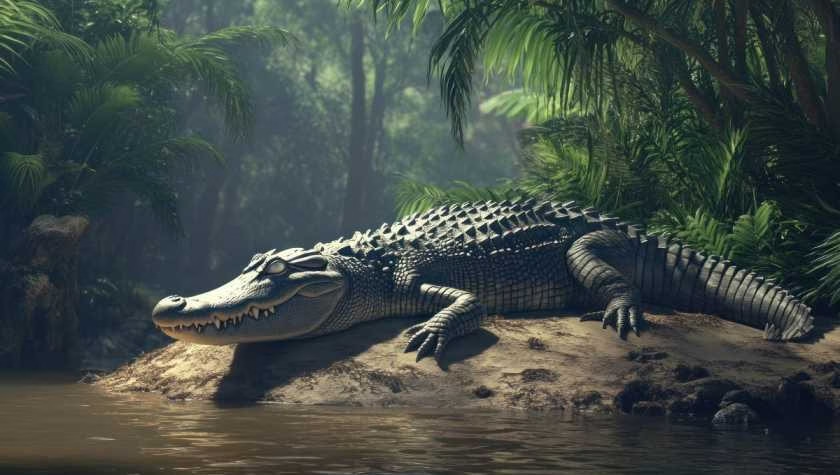
One of the most important reasons crocodiles survive extinction is their semi-aquatic lifestyle. Crocodiles spend much of their time in rivers, lakes, swamps, and wetlands. These environments are naturally more stable than land ecosystems.
When wildfires, extreme temperatures, and falling debris devastated land habitats, water bodies offered protection. Water helped regulate temperature, reduce exposure to heat, and shield crocodiles from immediate danger. Aquatic ecosystems also maintained food sources longer than land environments, allowing crocodiles to survive when terrestrial animals could not.
Cold-Blooded Metabolism Helped Them Endure Starvation
Crocodiles are cold-blooded animals, meaning they rely on external heat sources to regulate their body temperature. This trait gives them a very slow metabolism compared to warm-blooded animals.
After extinction events, food became extremely scarce. Warm-blooded animals needed constant food to survive, but crocodiles could drastically reduce their energy usage. Some crocodiles can survive for months or even years without eating. This low metabolic demand was a key reason crocodiles survived extinction during periods of widespread famine.
Flexible and Opportunistic Diet
Another crucial factor in how crocodiles survive extinction is their flexible diet. Crocodiles are not picky eaters. They consume fish, amphibians, birds, mammals, reptiles, and even decaying animals.
When specific prey species disappeared, crocodiles simply adapted by eating whatever was available. This opportunistic feeding behavior allowed them to survive the collapse of complex food chains. Species that depended on a single food source struggled, but crocodiles thrived through adaptability.
Read more:- What Do Lizards Eat? A Complete Guide to Lizard Diets in the Wild, Garden, and Home
Strong and Efficient Body Design
Crocodiles have a simple yet powerful body structure that has remained largely unchanged for millions of years. Their armored skin protects them from injuries, predators, and environmental hazards. Their powerful jaws allow them to capture and hold prey with minimal energy expenditure.
This efficient body plan required little evolutionary change, which proved beneficial during unstable times. While other species needed rapid adaptation, crocodiles already possessed a design that worked in many environments. This stability played a major role in why crocodiles survive extinction events.
Ability to Survive Extreme Temperatures
Crocodiles have an incredible ability to cope with temperature extremes. In cold conditions, they can slow down their bodily functions and remain nearly motionless. Some species can survive icy temperatures by keeping their nostrils above frozen water while the rest of their body stays submerged.
In hot conditions, crocodiles regulate body temperature by moving between water and land. This thermal flexibility helped them survive dramatic climate shifts following extinction events.
Energy-Saving Behavior and Dormancy
Crocodiles can enter a state similar to dormancy when conditions become harsh. During droughts, cold seasons, or food shortages, they conserve energy by reducing movement and metabolic activity.
This energy-saving behavior allowed crocodiles to outlast periods when other animals exhausted their resources. The ability to wait patiently until conditions improved is another reason crocodiles survived extinction when others did not.
Reproductive Strategy and Egg Protection
Crocodiles lay eggs in protected nests, often near water. While not all offspring survive, they produce enough young to maintain population numbers over time. Their parental instincts also play a role, as some crocodiles guard their nests and young.
This reproductive resilience helped crocodile populations recover even after massive population losses during extinction periods.
Slow Evolution Worked in Their Favor
Unlike many species that evolved rapidly, crocodiles changed slowly over millions of years. This slow evolution suggests that their original design was already highly effective.
When environments became unstable, species that relied on specialization struggled. Crocodiles, however, were generalists. Their slow evolutionary pace allowed them to persist through multiple extinction events without needing drastic changes.
Comparison With Dinosaurs
Dinosaurs were diverse and dominant, but many were highly specialized. Large body size, fast metabolism, and strict dietary needs made them vulnerable when food supplies vanished.
Crocodiles, on the other hand, were smaller, more adaptable, and required less energy. These differences explain why crocodiles survive extinction while dinosaurs could not.
Why Crocodiles Still Exist Today?
Modern crocodiles are the result of millions of years of survival and adaptation. They continue to thrive in rivers and wetlands across the world, proving that their ancient survival strategies still work today.
Their presence is a living reminder that success in nature is not always about size or strength, but about adaptability, patience, and efficiency.
The reason crocodiles survive extinction lies in their extraordinary adaptability. Their semi-aquatic lifestyle, low energy needs, flexible diet, durable body structure, and ability to tolerate extreme conditions made them perfectly suited to survive Earth’s most devastating events.
Crocodiles remind us that survival is not about dominance, but about balance. Their continued existence is one of nature’s greatest success stories—a powerful lesson in resilience that spans millions of years.


Hi readers. I’m Piyali Batabyal, a passionate blogger who loves to share her thoughts, ideas, and experiences across a variety of topics—from lifestyle and beauty to personal growth and creativity. With a curious mind and a love for words.
Alongside my writing, I am also a professional makeup artist with a flair for enhancing natural beauty and creating transformative looks.