


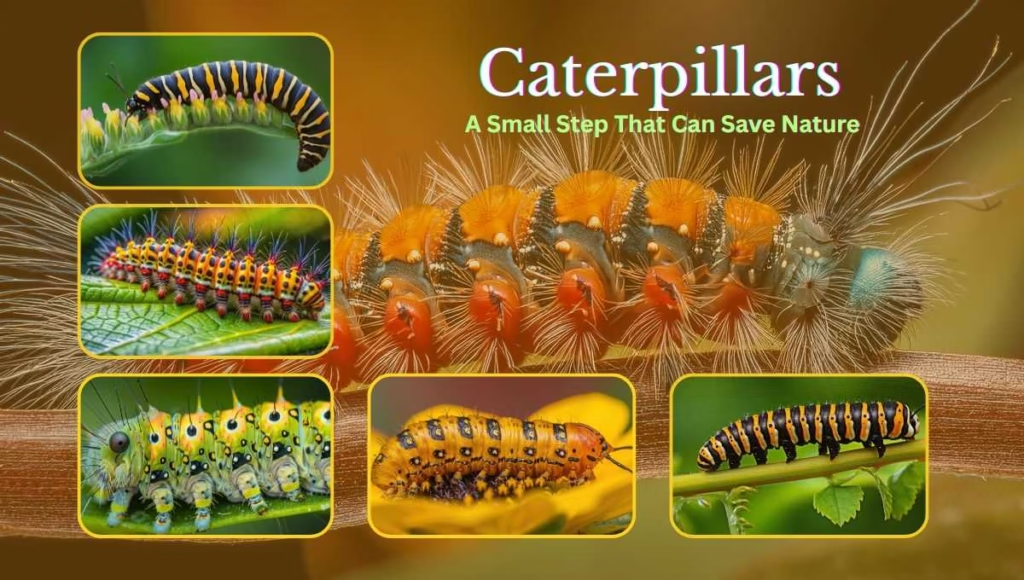
You may be looking out for flowers, fruits, food, and birds while tending your garden. But have you ever thought about how important insects, especially caterpillars or larvae, are to maintaining biodiversity? In this context, scientist Doug Tallamy says, if we can arrange the area under our trees properly, we can play a big role, in one wor, “Give caterpillars a ‘soft landing’”.
Why is this important?
Caterpillars are not simply small creatures that just eat leaves. They are later food for butterflies, owls or birds.
By “Give caterpillars a ‘soft landing’”, we can ensure that they reach a safe place after falling from the tree. The larvae can easily die due to walking on the grass or soil under the tree, or due to thickly cut grass.
When the caterpillars are healthy, they provide food for animals such as birds, lizards, bumblebees, and “the food web” or food chain.
How to “Give caterpillars a ‘soft landing’”?
Tallamy’s research suggests two simple but effective steps that are easy to implement in your area:
1. Leave the leaves under the tree
When the leaves fall from the tree, many people remove them. But I would say: do this, leave the leaves lightly in the area under the tree so that the caterpillars can easily find shelter under the leaf canopy.
This way, you will reduce the hassle of mowing and give biodiversity a little more time and space.
2. Plant native groundcover or small plants under the canopy of the tree
The canopy of a tree is the area that extends from one side of the tree’s branches to the other. Create an area in area where there is not much walking, the soil is less compacted. Tallamy suggests planting the following plants in that area:
- Ferns
- Sedges
- Woodland phlox (woodland phlox)
- Other native groundcovers and perennials
- Practical tips for your garden
Reduce the amount of grass under your trees, especially if the grass starts directly from the trunk, where these young are less likely to survive.
Create a “low-traffic area” under your trees (such as a small open space around the tree) so that the soil is not too stressed.
Get to know the list of native plants, plants that generally do well in your area. You can use a ‘native plant finder’ (such as the National Wildlife Federation).
Keep the foliage light, rather than removing it, and use as few chemical fertilizers or pesticides as possible that will harm the caterpillars or other organisms.
Read more:- 10 Amazing Animals That Can Change Their Color
What will be the benefit?
First, you are “giving caterpillars a ‘soft landing’” directly in your garden, creating a sustainable and balanced ecosystem.
The caterpillars will later develop into butterflies or as insects; they help pollinate flowers, fruits, and plants, meaning they can directly impact the productivity of your garden.
Birds, mollusks, small reptiles, and spiders are also part of this food chain, and if you help the caterpillars, the larger animal world will also thrive.
Best of all, it doesn’t cost much, and in most cases can be done with simple changes.
Some points of awareness
Many people think that having a ‘forest-like’ or ‘barren’ garden will look unsightly. But Tallamy says that’s a misconception, and with careful planning, you can “Give caterpillars a ‘soft landing’” and have a beautiful garden.
Although the introduction is small, such changes don’t pay off quickly; they can take time. However, biodiversity is slowly declining in many places, except for uncut lawns and specific plants.
Choose local plants that are compatible with your terrain, soil type, and climate. Choosing the wrong plants can make it difficult to get the desired results.
If you change your mind and start “Give caterpillars a ‘soft landing’” activities in your garden, such as not removing leaves, providing light bedding (groundcover) under plants, and limiting walking paths, then you are creating a healthy environment not just for one or two butterflies, but for generations to come. It is a very small step, but a big step for nature and animals.


Hi readers. I’m Piyali Batabyal, a passionate blogger who loves to share her thoughts, ideas, and experiences across a variety of topics—from lifestyle and beauty to personal growth and creativity. With a curious mind and a love for words.
Alongside my writing, I am also a professional makeup artist with a flair for enhancing natural beauty and creating transformative looks.