


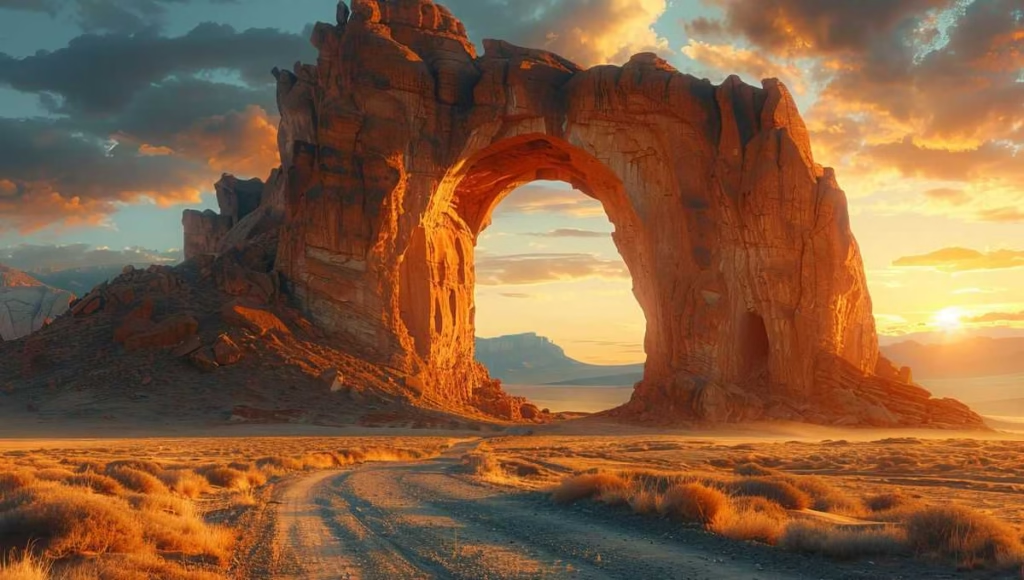
The name Death Valley conjures up images of a terrifying, scorching desert. But it’s not just imagination, science says it’s a real contender for the title of The Hottest Place on Earth. Inspired by Medium writer Furqan Asghar’s post “Death Valley: The Hottest Place on Earth,” the following is a detailed analysis, with some updates and relevant information added.
1. Geography and Shape
Death Valley is a deep valley located in the Mojave Desert of California, USA.
It covers an area of about 3,000 square miles and is surrounded by towering mountains on all sides.
Most of the valley is below sea level, which helps maintain the temperature.
Because of this special landform, the sun’s rays can hit the ground with great force and “trap” the heat, resulting in hot air that spreads very slowly out of the valley.
2. Record temperatures and record-breaking data

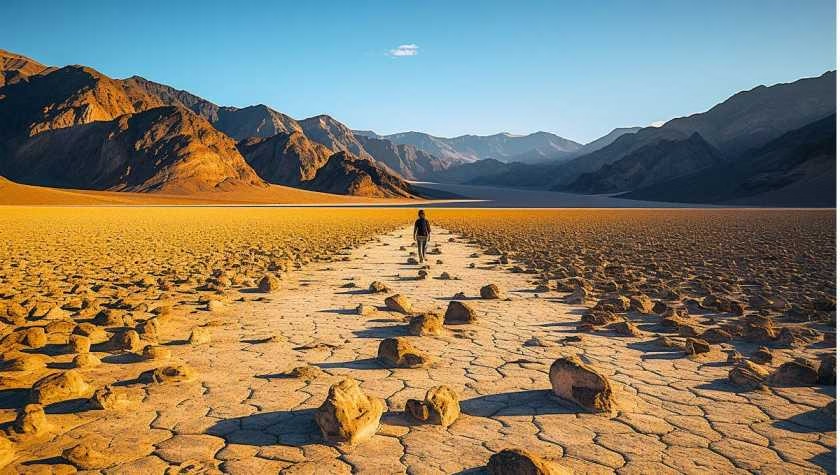
Death Valley is famous for being called The Hottest Place on Earth many times. According to Medium, on July 10, 1913, the air temperature at Furnace Creek was 134°F (56.7°C), which has long been a world record.
The National Park Service also says this: Death Valley has multiple records as the “hottest place on earth.”
However, it’s not just about the air temperature; the ground temperature is also extremely extreme. For example, a temperature of 201°F (94 °C) has been recorded at ground level.
3. Why is it so hot? Causes and processes
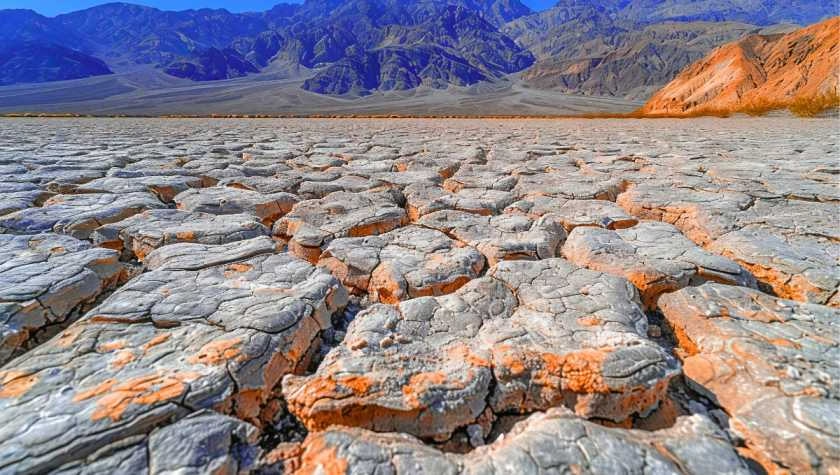
There are some scientific reasons behind why Death Valley gets so hot:
- First, the valley’s low elevation. It is below sea level in many places, which creates an opportunity for the air to cool down and heat up.
- Second, there are mountains on all sides, which block cold air from entering the valley and help keep the heat in.
- Third, there is very little vegetation, and the sky is usually clear; as a result, the sun’s rays can hit the ground directly, and the heat is trapped in the ground.
- Fourth, the ground, heated by daylight, does not gradually release hot air at night; the hot air contracts as it descends, increasing the heat even more.
All of these factors combine to make Death Valley truly a kind of “natural sinkhole” which often does not release hot air, but rather traps it in one place and increases the heat.
Experience the Death Valley story with Melissa Broder, the most keen experimenter.


Death Valley Melissa Broder
Death Valley by Melissa Broder is a darkly comic novel about grief and survival set in the California desert. The story follows a woman who flees to a Best Western motel in the high desert to escape the emptiness she feels whilst dealing with her father’s illness in the ICU and her husband’s worsening condition.
4. Weather and Environment
Aridity and Complete Desert
Precipitation in Death Valley is very low. The National Park Service says that the average annual rainfall at Furnace Creek is only a few inches.
This dry environment also plays a major role in increasing the heat because the low humidity makes it easier to absorb heat, and the air heats up quickly.
Nighttime temperatures
Despite the hot days, Death Valley often does not drop much at night. Records show that nighttime temperatures still drop to 80–90°F (30–35 °C), which makes it difficult to rest.
5. Geodiversity and Biodiversity
- Although the environment is extremely extreme, there is biodiversity, and some animals and plants are adapted to it.
- For example, in addition to the desert, there are desert tortoises, bighorn sheep, and kit foxes, which have learned to survive in the extreme heat and lack of water.
- In terms of landforms, the valley is dotted with salt flats, dunes, and jagged canyons.
- There is a mysterious area called “Racetrack Playa”, where rock balls have been seen moving slowly, and it is believed that the combined effects of wind and ice are behind it.
- This diverse landscape is not only beautiful to the eye but also a fascinating place for natural history and climate science.
6. Dangers and Challenges
Although Death Valley attracts visitors as the Hottest Place on Earth, there are several risks when visiting:
- Heat-related illnesses: Extreme heat, little shade, and high ground temperatures can pose a danger to humans, especially in the heat, which can lead to dehydration and heatstroke.
- Tourists need to be careful: National Park authorities repeatedly warn that adequate water and safety measures should be taken before entering the hot season.
- Temperature history: As one report shows, not only was 1913 recorded, but there was also a very low temperature that winter.
- Storms and flash floods: Although there is very little rain, lightning strikes in the hot desert can occasionally cause dangerous flash floods.
7. Tourism and Cultural Importance
Death Valley is not just popular for its temperature; it is a prominent tourist destination because:
- It has a visually stunning landscape, featuring attractions such as salt flats, dunes, wide canyons, and the Sculpture Grounds.
- Most tourists head to “Furnace Creek” because it is a kind of gateway, and the visitor center, hospitality, and guides here are well-organized.
- The tag “The Hottest Place on Earth” also attracts scientific and educational tourists, those interested in natural history, climate change, geography, etc.
- However, park authorities always warn that planning is necessary before entering the heat; adequate water, protective clothing, and timing are important.
Read more:- Miraculous Green Light: The Wonder of Plants Glowing in the Dark
8. Modern Influences and Climate Change
Death Valley’s heat experience may be more intense due to global warming over the past few decades:
- July 2024 was the hottest month on record in Death Valley, with an average 24-hour temperature of 108.5°F (42.5°C).
- Such extreme heat may become more common as a result of global warming, and the risks to travelers may increase.
- National Parks and other authorities are promoting new safety policies and awareness for tourists, as the number of heat-related accidents may increase by the hour.
Read more:-Top 7 Amazing Switzerland Tourist Places: Most Beautiful Places In Switzerland
9. Summary and Perspectives to Consider
Death Valley is a natural wonder, and it is frequently associated with the title of “The Hottest Place on Earth.”
- The valley’s geography, wind movement, and ability to retain heat make it ideal for heating.
- Although the temperature record (134°F or 56.7°C) is old, modern observations and experience show that the heat is still immense.
- Life here is tough, but some animals and plants have adapted amazingly to survive.
- It is a popular tourist destination, but the safety of those who come here must be of utmost importance.
- Climate change is increasing the likelihood of heatwaves in the area, which is a new challenge for park authorities and tourists.
Death Valley teaches us how much physical intensity and beauty nature can create together. It is not just a drama to be called “The Hottest Place on Earth,” but a science-filled, history-studded, and daily challenge.


Hi readers. I’m Piyali Batabyal, a passionate blogger who loves to share her thoughts, ideas, and experiences across a variety of topics—from lifestyle and beauty to personal growth and creativity. With a curious mind and a love for words.
Alongside my writing, I am also a professional makeup artist with a flair for enhancing natural beauty and creating transformative looks.