


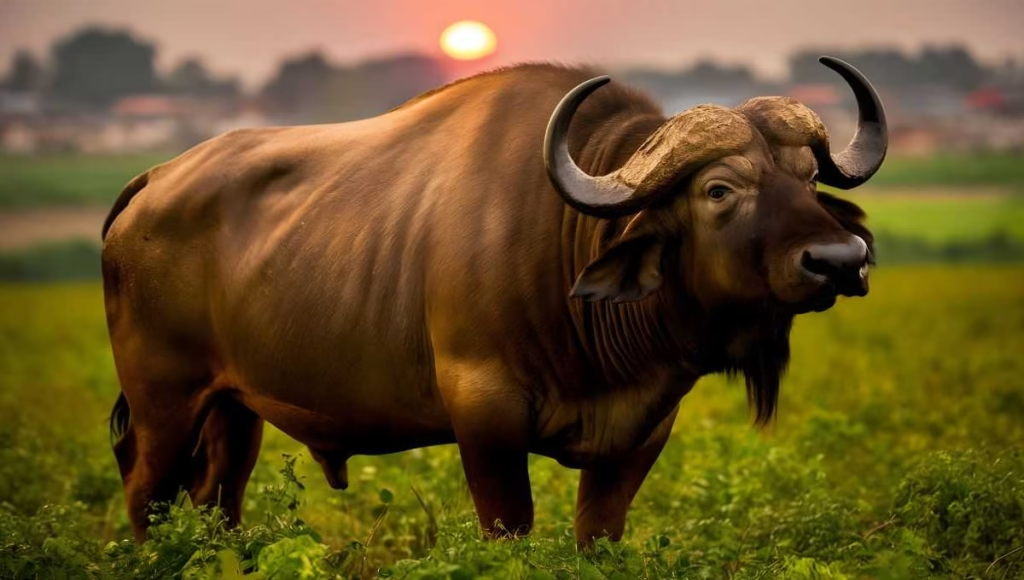
India is home to the world’s largest buffalo herd, which contributes nearly half of its total milk production. Yet, buffalo breeding has long struggled with low conception rates and limited access to high-quality semen storage techniques. That is about to change.
Scientists have now developed a new yolk-free semen dispersal technology that promises to significantly improve buffalo breeding outcomes. The breakthrough eliminates the use of egg yolk – a common but biologically incompatible ingredient – to provide a cleaner, safer and more efficient artificial insemination method.
This innovation could transform India’s buffalo breeding practices, boosting fertility, animal health and productivity in the dairy sector. In this article, we explore how yolk-free technology will boost buffalo breeding, what makes it a game-changer, and how it benefits both farmers and the rural economy.
What is yolk-free technology in buffalo breeding?


Traditionally, sperm preservation for artificial insemination has relied on egg yolk-based extenders. These extenders protect sperm cells from damage during freezing and thawing. However, this has several disadvantages:
- High biological variability between batches
- Risk of microbial contamination
- Difficulty in determining quality standards
- Short shelf life
The new yolk-free technology developed by Indian researchers replaces egg yolk with a synthetic, plant-based extender that maintains sperm viability and motility better than traditional methods.
In simple terms, this technology creates a cleaner and more stable environment for sperm preservation, ensuring healthier and more fertile buffalo semen.
Why is this innovation important for buffalo breeding?
1. Increases conception rates
Poor conception rates are one of the biggest challenges in buffalo breeding. The new yolk-free medium provides consistent protection for sperm cells, leading to higher fertilization success and improved reproductive efficiency.
2. Eliminates biosafety risks
The use of egg yolk introduces potential biosafety risks, including bacterial contamination. The yolk-free extender eliminates these risks, ensuring safe handling and storage—especially important for rural breeding centers.
3. Improves semen longevity and quality
Semen stored using yolk-free technology has shown long-lasting and high motility rates during laboratory testing. This means it can be transported and stored for long periods without losing potency.
4. Cost-effective for farmers
Since the new medium can be produced artificially under controlled conditions, it reduces the reliance on biodegradable animal-based materials. This results in lower production costs and greater purchasing power for both breeding centers and farmers.
How the Yolk-Free System Works
The process of preserving semen in buffalo breeding remains essentially the same, but the Extender formula has a significant improvement.
Here’s how it works step by step:
- Collection: Semen is collected from high-quality breeding bulls.
- Mixing: The semen is then mixed with a yolk-free extender containing protective agents, antioxidants and nutrients.
- Cooling: The mixture is slowly cooled to low temperatures to stabilize the sperm cells.
- Freezing and storage: It is frozen in straw and stored in liquid nitrogen for future use.
- Insemination: If necessary, the semen is thawed and used for artificial insemination of buffaloes.
The result? A clean, quality and long-lasting semen sample, ensuring improved conception rates and healthy offspring.
A step towards sustainable dairy development
India’s dairy sector relies heavily on buffalo milk, which is richer in fat and protein than cow’s milk. However, productivity lags due to inefficient breeding systems and limited access to genetic improvement programmes.
- This new technology is fully aligned with government initiatives such as:
- Rashtriya Gokul Mission (RGM) – focused on improving indigenous cattle and buffalo breeds.
- National Livestock Mission (NLM) – promoting scientific breeding practices and sustainable livestock management.
By integrating yolk-free technology into these programmes, India can improve both genetic quality and milk productivity while ensuring environmental and animal welfare standards.
Read more:- 5 Birds with Fairy-Tale Worthy Dazzling Head Crests
Benefits for farmers and the dairy sector
Adoption of yolk-free technology can have a wide range of benefits across the dairy value chain:
- Higher fertility rates: Reduced sperm loss means more successful conceptions.
- Improved calf health: Stronger offspring from improved semen quality.
- Less wastage: Longer life and consistent results lead to reduced losses.
- Economic growth: Increased milk production increases rural income.
- Global competitiveness: Sustainable buffalo breeding makes India a leader in innovation.
Farmers can expect not only healthier herds, but also higher profits and productivity over time.
Expert insights
Animal biotechnology experts have described the yolk-free method as a “paradigm shift” for the Indian dairy industry. By eliminating biological variability and the risk of contamination, the technique ensures a scientifically standardized method for breeding.
A leading researcher at the National Dairy Research Institute (NDRI) explains that the aim is to “replace all egg-yolk-based extenders in buffalo breeding programmes with this cleaner, more efficient alternative”.
Initial field trials have already demonstrated improved pregnancy rates and improved sperm motility compared to traditional extenders.
The introduction of yolk-free technology marks a paradigm shift in buffalo breeding in India. It addresses long-standing issues such as low conception rates, contamination risks and inconsistent semen quality – paving the way for a more productive and sustainable dairy industry.
By blending biotechnology with traditional animal husbandry, this innovation has the potential to transform rural livelihoods, ensuring that India’s dairy farmers can more easily breed healthier, more productive buffalo.


Hi readers. I’m Piyali Batabyal, a passionate blogger who loves to share her thoughts, ideas, and experiences across a variety of topics—from lifestyle and beauty to personal growth and creativity. With a curious mind and a love for words.
Alongside my writing, I am also a professional makeup artist with a flair for enhancing natural beauty and creating transformative looks.