
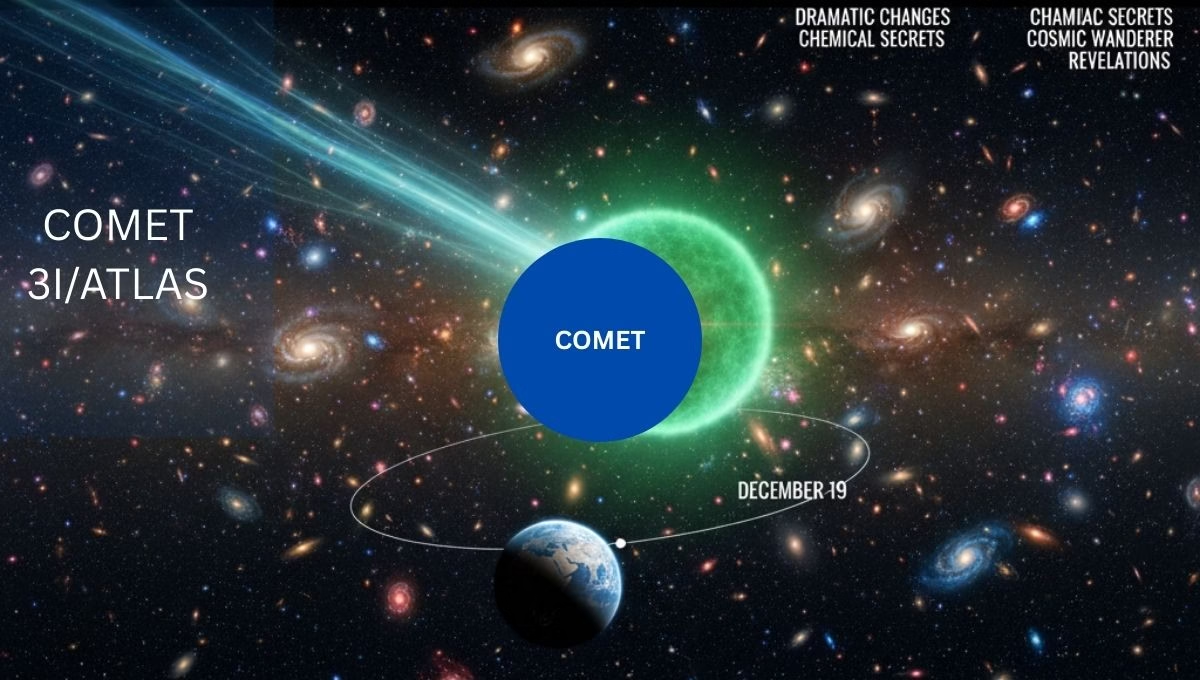
Comet 3I/ATLAS, an interstellar visitor hurtling through our solar system, is growing noticeably greener and brighter as it nears its closest pass by Earth, signaling a surge in activity that is captivating astronomers worldwide.
A rare interstellar comet is in peak activity
New observations from the Gemini North telescope in Hawaii, taken on November 26, show comet 3I/ATLAS in one of its most active phases since it entered the inner solar system. Recently exposed to intense solar radiation during a close approach to the sun in late October, the comet is shedding vast quantities of gas and dust, building a bright coma around its nucleus and a striking tail stretching into space. The object is on a hyperbolic, one-time-only path through our cosmic neighborhood, meaning it will not return after this passage.
3I/ATLAS is only the third known interstellar object after 1I/‘Oumuamua and 2I/Borisov, and is thought to be both the largest and likely the oldest of the trio, having spent billions of years in interstellar space before drifting into our system. Its current estimated speed of about 130,000 mph (210,000 km/h) underlines just how fast it is cutting through the solar system on its escape trajectory.
Why the comet is turning green
Astronomers used four different optical filters — blue, red, orange and green — to analyze the light from 3I/ATLAS and found that its coma now emits a faint but clear greenish glow that was not present in earlier observations. This color change points to the release of new gases as buried ices heat up and sublimate, pushing fresh material into space from previously untouched layers of the comet.
The green hue is linked to diatomic carbon, a molecule composed of two carbon atoms that fluoresces green when energized by solar ultraviolet radiation. Many comets from within our own solar system display similar coloration when they become active near the sun, including recent objects such as the so-called “Mother of Dragons” comet 12P/Pons–Brooks and the newly spotted C/2025 F2 (SWAN), placing 3I/ATLAS within a familiar physical framework despite its alien origin.
Read More: Vivo V60e 5G vs Vivo V60: What’s New in the Latest V-Series Mobile?
From reddish visitor to chemically evolving world
When 3I/ATLAS was observed months earlier by the Gemini South telescope in Chile, its appearance was distinctly redder, suggesting a different mix of dust and gas dominating its visible light. The subsequent shift from redder to greener as it warmed up is a strong indicator that new molecular species are now venting into space, allowing scientists to probe different layers of its structure and composition over time.
This evolution gives researchers a rare window into how an interstellar comet responds as sunlight penetrates deeper beneath its surface, potentially exposing material that has remained unchanged since the earliest epochs of its home star system. As activity ramps up, large jets have been seen blasting sunward, and the surface shows signs of long-term irradiation from its journey through interstellar space, reinforcing the view that this is a heavily processed but still physically “typical” comet rather than exotic technology or an artificial object.
Close pass by Earth and the risk factor
3I/ATLAS will make its closest approach to Earth on December 19, passing at a distance of about 170 million miles (270 million kilometers) — comfortably far beyond any impact concern but close enough for detailed, high-quality observations from telescopes across the globe. At this range, it remains an object for instruments rather than a spectacular naked-eye comet, but subtle brightness fluctuations and outbursts can still be tracked with professional and some advanced amateur setups.
Its hyperbolic, U-shaped orbit confirms that gravity from the sun and planets will not capture the comet; instead, once this brief encounter ends, 3I/ATLAS will head back into deep space, never to revisit Earth’s vicinity. That one-time nature adds urgency to current observing campaigns, as any data gathered now will likely stand as the definitive record of this object for the foreseeable future.
Potential outbursts and delayed fireworks
Astronomers are particularly interested in how 3I/ATLAS behaves after its peak heating phase near the sun, because comets often show delayed reactions as heat propagates slowly into their interiors. It can take time for thermal energy to reach deeper volatile-rich layers, and once it does, the sudden evaporation of new chemicals can trigger dramatic outbursts — rapid, temporary surges in brightness and activity.
Scientists note that this lag means some of the most spectacular changes could occur as the comet is moving away from the sun, not just on the way in. If such an outburst happens, it would provide an excellent opportunity to study freshly exposed material and refine models of how interstellar comets respond to solar heating, including how their crusts fracture, vent, or crumble under stress.
What 3I/ATLAS can reveal about other star systems?
Dozens of observatories and spacecraft distributed around the solar system are tracking 3I/ATLAS to refine estimates of its size, shape, trajectory, and chemical makeup. Each new measurement helps astronomers compare it with comets native to our own solar system, testing whether interstellar visitors share a common formation history or reflect very different conditions in their birth environments.
Because 3I/ATLAS is thought to be extremely old, studying its ices and dust could provide rare clues about the early building blocks of planets around other stars, preserved in deep freeze for billions of years. Insights into its composition and structure may improve models of how the first star systems in the Milky Way formed, how material was ejected into interstellar space, and how often fragments from those distant systems wander into ours.
Debunking alien-tech myths and focusing on science
Despite online speculation, astronomers and major space agencies consistently describe 3I/ATLAS as a physically ordinary comet whose origin lies beyond the solar system, not as a probe or artifact built by an advanced civilization. Its behavior — outgassing, color changes, dust production, and jets — all align with standard comet physics once its interstellar history and current orbit are taken into account.
By treating 3I/ATLAS as a natural laboratory rather than an anomaly in search of a sensational explanation, researchers can use this fleeting encounter to sharpen their understanding of comet evolution and interstellar chemistry. For the scientific community, the real intrigue lies not in science fiction scenarios but in what this green, brightening traveler can teach about the diversity and history of worlds far beyond our own sun.

Hi Readers, This side Subhasis Banerjee. I love to write blogs as I think I am a passionate writer and digital storyteller, curating insights on trending topics across technology, business, world affairs, automobiles, sports, entertainment, and astrology on various blogs.. With a keen eye for detail and a drive to inform and inspire, I try to transform complex ideas into accessible content for curious minds. When I am off in writing, I enjoy exploring emerging tech, tracking market trends, and creating content that sparks conversations, and I love to ride.